Aristeia
what to wear, what to war...
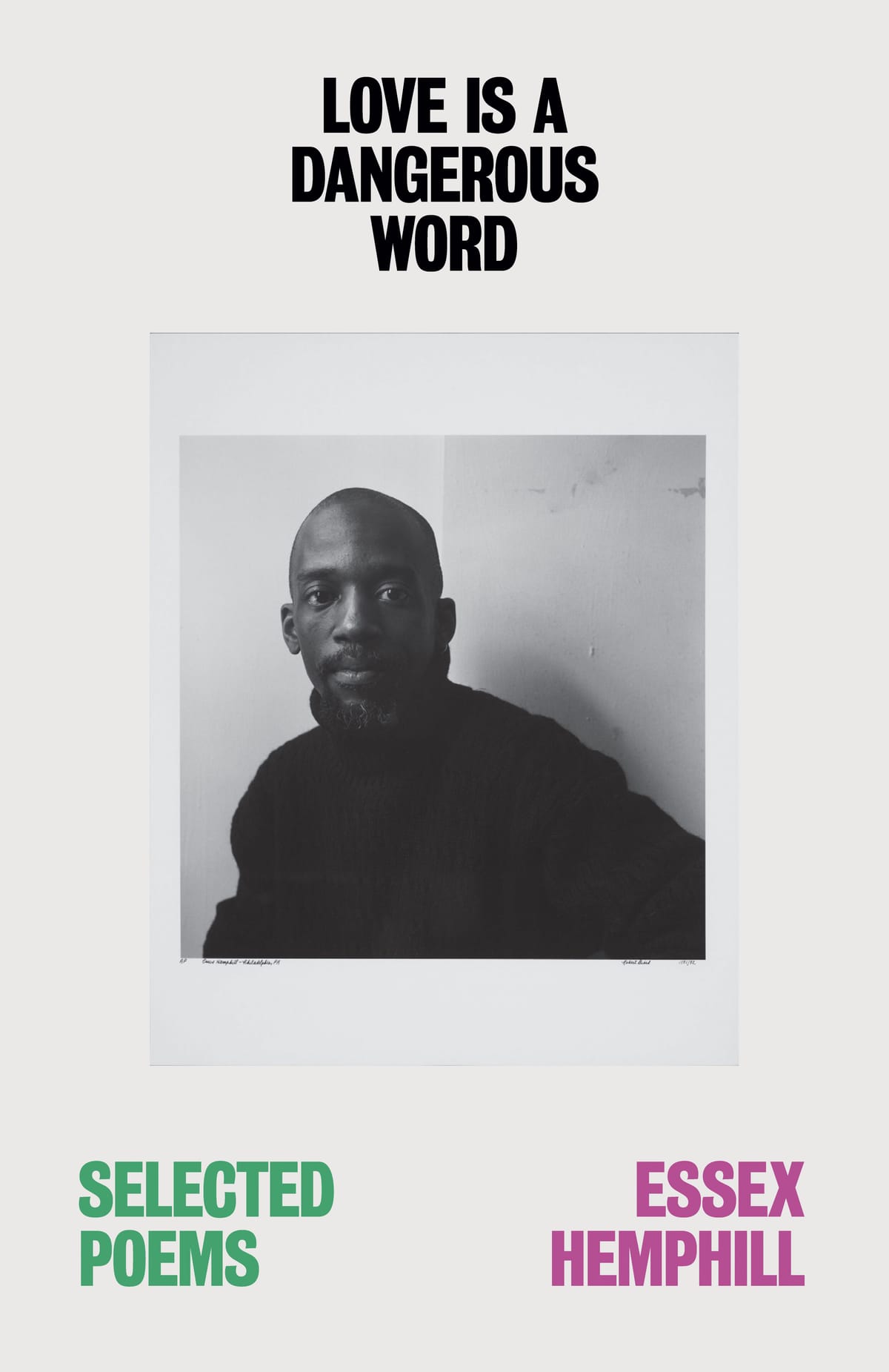
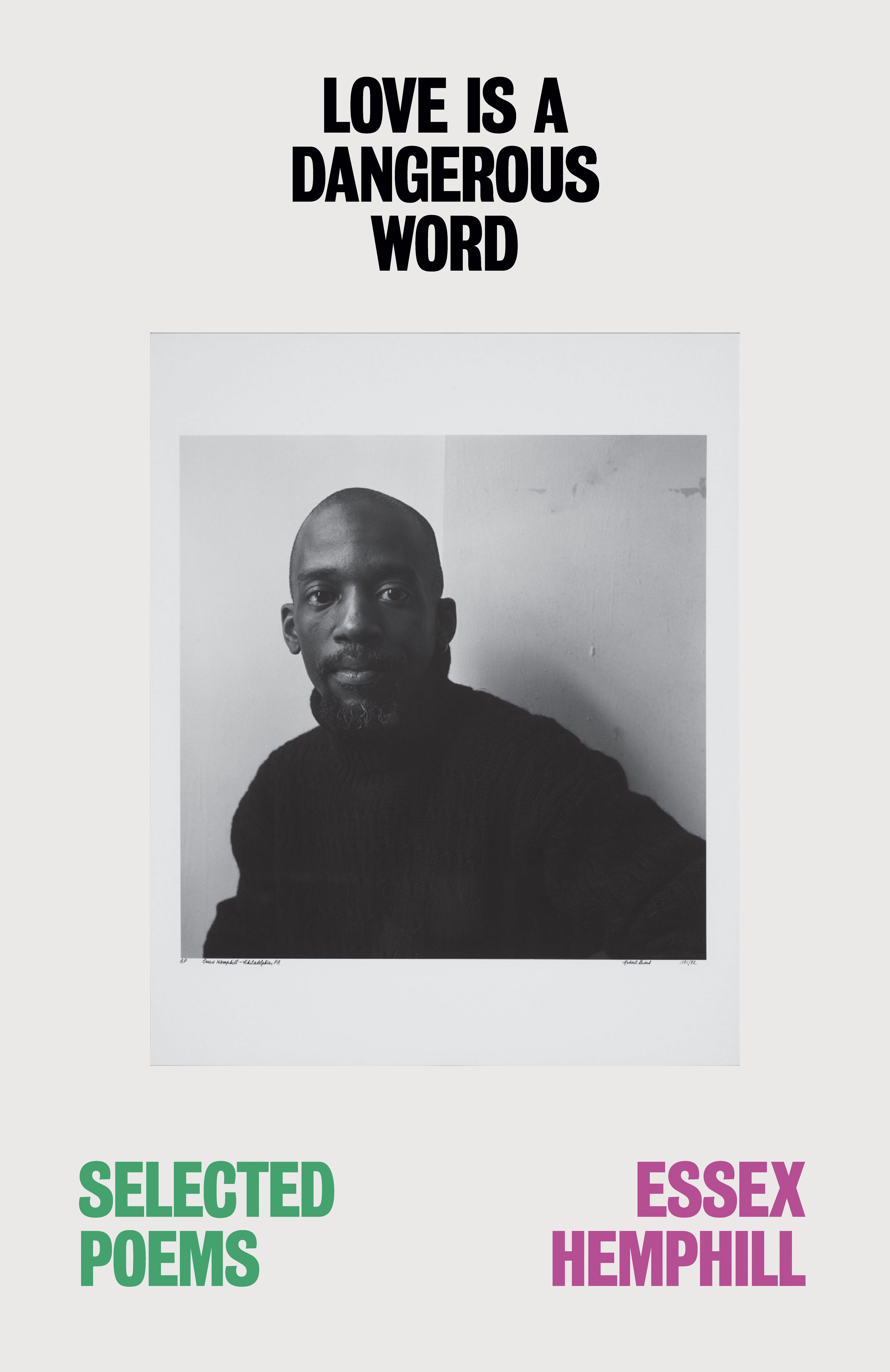
I am late on this month’s Rearview, I apologize! I intended this to be more of a review of Love is a Dangerous Word by Essex Hemphill, edited by Robert Reid-Pharr and John Keene, but it turned into something else. The odd juxtaposition of Hemphill and Pope Francis is a result of the latter’s recent letter to US Bishops. The essay is criminally sprawling and undisciplined and picks up questions I’ve explored a little in “Brothers and Bathhouses,” so consider reading that if you haven’t yet.
“When my brother fell / I picked up his weapons / and never once questioned / whether I could carry / the weight and grief, / the responsibility he shouldered.”
– Essex Hemphill, “When my brother fell”
“What I tell you in the dark, speak in the daylight; what is whispered in your ear, proclaim from the roofs.”
– Matthew 10:27
High above the pulpit of the Episcopal church next door, a sword hangs. The sword—cloth, sewn to a banner—points downward, accompanied by the words SPIRITUS GLADIUS. The reference is to Ephesians 6:17: “And take the helmet of salvation, and the sword of the Spirit, which is the word of God.” The verse is part of the famous passage in which the follower of Christ is, metaphorically, an armed warrior, preparing for battle. The placement of the banner reminds the congregation and the preacher that the pulpit is for proclamation.
The passage in Ephesians is an invitation to some sort of spiritual aristeia. Aristeia is a convention of epic poetry in which a hero embraces their moment in battle, beginning, sometimes, with an account of the hero’s arming. I was introduced to the concept through the Iliad. Hephaestus, god of fire and smith to the gods, forges a new set of armor for Achilles to fight Hector. The set includes a magnificent shield (a triple ply rim wrapped around five layers of metal—yes darling), into which the smith inlays a scene that takes Homer some two hundred lines to convey: one city preparing to raid another, skirmishing on the riverbanks, Death reaping his bounty, but also broad fields, farmers reaping their own bounties, a king, a proud oak, women pouring barley, fruit in wicker baskets, dogs nipping at the heels of herders, ox grazing, rapturous dancing and joy, so much life that by the end of it, what even was the war?
The armor is winged to Achilles to avenge the death of his beloved, Patroclus, ur bb boy in his boyfriend’s armor, slain by Hector, that motherfucker, who taunts the corpse he made, like an IDF soldier.
Achilles’s arming is preceded by the body of Patroclus, still alive, stripped on the field. Patroclus entered battle wearing Achilles’s own gear to fool the Trojans. But Apollo knocks Achilles’s helmet off the head of Patroclus then tears away his breastplate, allowing the first spear to pierce him. Hector finishes the job. Book Nineteen, “The Champion Arms for Battle” per Robert Fagles’s translation, begins with Achilles’s mother, the goddess Thetis, finding her boy cradling the dead body of Patroclus. Thetis, her son’s greatest advocate before the gods, “breathed in her son tremendous courage / then instilled in Patroclus’ nostrils fresh ambrosia, / blood-red nectar too, to make his flesh stand firm.” With the flesh of his unarmed lover transmogrified into the flesh of a fruit, coursing with nectar, Achilles strides off, roused by the same breath, to rally troops and put on his new armor in all of its splendor.
I’ve started attending church again, by which I mean I’ve been two Sundays in a row and would’ve gone a third had the service not been cancelled due to snow. During every sermon and every reading, I look up, where the sword hangs over the head of the preacher, poised to fall—a reminder that, if the metaphor is to be followed, the word of God is a double-edged sword that may cut the ones who wield it. I love that banner.
Paul, writing to church in Ephesus, doesn’t go into the same depth of detail as Homer in describing God’s armor. The Christian cult of white warrior masculinity, described recently in Kristin Kobes Du Mez’s Jesus and John Wayne, must use the passage as a prism into a larger ideology—it’s just a paragraph of text, and it’s metaphor. We are told that followers of Jesus “are not contending against flesh and blood, but against the principalities, against the powers, against the world rulers of this present darkness, against the spiritual hosts of wickedness in the heavenly places” (RSV 6:12).
These are the familiar fantasies: delusions of Christian embattlement fuel an actual regime of nationalist Christian supremacy. Surely, these fantasies are now being met by new ones—of regicide and (armed?) resistance—that visit the minds of liberals who desire a heroic resistance that they continue to deny others, notably, the people of Gaza and the Black subjects of state violence here. The present darkness is not a fantasy, and the resistance needed is not a fantasy, so what is it? Christians as Christians must ask what it means to fight principalities and powers and world rulers and spiritual hosts of wickedness, not flesh and blood, while seeing quite clearly that our world rulers are flesh and blood.
In the Gospel of Matthew, Jesus says things that may be contradictory. He says he came to bring not peace but a sword and to set families against each other (Matthew 10:34), but he also instructs his followers to turn the other cheek and, if sued for a shirt, to also give your coat (Matthew 5: 38–40). How do you thread that needle?
The pursuit of self-preservation or the preservation of one’s own volk, defined in any way besides the most expansive understanding of “who is my neighbor?” is not a Christian impulse, darlings. After baptism, the ties of biology are not ultimate. They are untied and woven into a different fabric. The Pope’s recent letter to US Bishops articulates this in a dignity-inflected Catholic key:
Christian love is not a concentric expansion of interests that little by little extend to other persons and groups. In other words: the human person is not a mere individual, relatively expansive, with some philanthropic feelings! The human person is a subject with dignity who, through the constitutive relationship with all, especially with the poorest, can gradually mature in his identity and vocation. The true ordo amoris that must be promoted is that which we discover by meditating constantly on the parable of the “Good Samaritan” (cf. Lk 10:25-37), that is, by meditating on the love that builds a fraternity open to all, without exception.
But worrying about personal, community or national identity, apart from these considerations, easily introduces an ideological criterion that distorts social life and imposes the will of the strongest as the criterion of truth.
Francis says human persons’ “constitutive relationship”—what makes us the subjects we are—is our relationship with all. I am only an amateur reader of recent Papal letters (as in, I read them as a lover, generally), but the way Francis subsumes insular identities and loves into a broader love reminds me of his Fratelli Tutti, published in October, 2020, “On Fraternity and Social Friendship.”
The encyclical outlines a love “that transcends the barriers of geography and distance,” and, citing his namesake St. Francis of Assisi, “declares all those who love their brother ‘as much when he is far away from him as when he is with him.’” This is a “fraternal openness” to all, which Pope Francis offers as a response to a growing “social fragmentation” to which he continues to witness.
Social fragmentation, per Francis, stems from a set of forces including inhumane markets, unvalued human rights, the internet’s failure to deliver progress, xenophobia, forced migration, etc. Solutions to social fragmentation offered in the Catholic moral teaching that I have come into contact with often lean heavily on recuperations of the nuclear family and heterosexual marriage. So to me, a discussion of marriage is an absence that haunts the encyclical. I kept waiting for it to happen—at moments it seemed imminent, as when Francis laments in chapter one a general “decline in the birthrate,” which, he says, “is a subtle way of stating that it is all about us, that our individual concerns are the only thing that matters.” But this complaint about individual myopia supports his perception that society has abandoned its own members who are deemed useless, such as the poor, disabled, elderly, and unborn, rather than to inaugurate a campaign to fix the ills of society through renewed marital vigor. An investment in heterosexual reproduction and family is present, albeit in a different way to what I was expecting.
In Paragraph 8, he writes, “In the depths of every heart, love creates bonds and expands existence, for it draws people out of themselves and towards others. Since we were made for love, in each one of us ‘a law of ekstasis’ seems to operate: ‘the lover “goes outside” the self to find a fuller existence in another.’ For this reason, ‘man has to take up the challenge of moving beyond himself.’”
When speaking of ekstasis, Francis cites Love and Responsibility by his predecessor, Pope John Paul II. Love and Responsibility offers a dull theology of marriage. It was published in 1982, seventeen years prior to promoting Theodore McCarrick to the archbishopric of Washington in 1999, knowing that McCarrick had slept with young seminarians, as the Washington Post reported a month after Fratelli Tutti was published. The portion Francis refers to is from a chapter entitled “The Ethical Analysis of Love.”
The sentence Francis cites is clearly about the love between a man and a woman in marriage. In such love, John Paul writes, “The person no longer wishes to be its own exclusive property, but instead to become the property of that other. . . . What might be called the law of ekstasis seems to operate here: the lover ‘goes outside’ the self to find a fuller existence in another. In no other form of love does this law operate so conspicuously as it does in betrothed love.”
I’ve never quite understood the valorization of marriage by ostensibly celibate men. Here is one such drooling instance, in which John Paul aligns the shattering experience of mystical transcendence with property ownership. The former Pope does not say that marriage is the only form through which this relational ecstasy is operable, but it is the form in which the ecstasy is most noticeable, most obvious. But that really does depend on what you’re willing to see, doesn’t it?
More Walt Whitman hymning democracy and homosocial adhesiveness than JPII melting wedding bands into a golden calf.
Francis takes up his predecessor’s claim—“in no other form of love does this law operate so conspicuously as it does in betrothed love”—as a challenge, a question, putty. In Fratelli Tutti, Francis is more interested in speaking of the relationships he is familiar with as a Jesuit, even while placing them within a universal humanity. He writes, “Nor can I reduce my life to relationships with a small group, even my own family.”
It sounds as if he might be preparing to launch into a rehearsal of marriage’s virtues when he says, “As couples or friends, we find that our hearts expand as we step out of ourselves and embrace others.” But he continues, “Closed groups and self-absorbed couples that define themselves in opposition to others to be expressions of selfishness and mere self-preservation.” The couple is, at least in this encyclical, relativized. Couples are placed alongside friendships. Monogamy may, but does not necessarily, lead to an other-focused embrace of the world, which is the romance of many Christian theologies of marriage. For some, the coupledom can be a narrowing of life, a shearing away of friendships, a vortex of compounding alienations. Happy belated Valentine’s Day.
Francis lifts John Paul II’s language from its marital context and sets it within a broader web of relationships. His appropriation of a snippet of JPII’s marriage theology encapsulates a more general move he makes in Fratelli Tutti: he retools language familiar to discussions of marriage to describe a “universal communion,” “social friendship,” “universal openness.” More Walt Whitman hymning democracy and homosocial adhesiveness than JPII melting wedding bands into a golden calf.
With only a little bit of squinting, one can see Francis drawing transforming the classical (and alleged) goods of marriage into a theology of fraternity. In Augustine’s formulation the goods of marriage are proles (childbearing/”fruitfulness”), fides (faith/mutual support/care), and sacramentum (sacramental union/becoming one flesh). Francis doesn’t say that’s what he’s doing, but that’s what he’s doing.
Proles: We find a concern for fruitfulness in Fratelli Tutti, not through childbearing and -rearing, but through communal bonds: “A land will be fruitful, and its people bear fruit and give birth to the future, only to the extent that it can foster a sense of belonging among its members, create bonds of integration between generations and different communities, and avoid all that makes us insensitive to others and leads to further alienation.”
Fides: The social bonds Francis describes are characterized by mutual love and support, which, in the context of marital theology, are intended to prevent adultery. Francis writes, “A truly human and fraternal society will be capable of ensuring in an efficient and stable way that each of its members is accompanied at every stage of life.” Everyone needs accompaniment—married, single, celibate, lover of lovers. He is not vague in what this sort of support looks like: he argues for “stronger and more efficiently organized international institutions”—a sort of “world authority regulated by law. . . . Equipped with the power to provide for the global common good, the elimination of hunger and poverty and the sure defense of fundamental human rights”—as well as the strengthening of the UN and other such global institutions. Francis’s social and fraternal theology feeds into his economic agenda.
Sacramentum: Here, in marriage theology, we are likely to hear about two becoming one flesh. Francis parries, saying, in welcoming the stranger, “we come to experience others as our ‘own flesh’ (Is 58:7).” Francis describes “moving beyond ourselves” as the sort of love “made possible by God’s grace as a movement outwards towards another, whereby we consider [here, quoting Aquinas] ‘the beloved as somehow united to ourselves.’” Call that sacramentum, which is the symbolic union of Christ and Church. Francis seeks a communion between people that is universally available. (Similarly, as Francis states several times, salvation is a communal affair.)
The language Francis uses is still gendered: it’s fraternity for all humanity, extending a category used by Catholic Religious Institutes of men.
The language of brotherhood and sisterhood was common in gay/lesbian liberation, but the articulation of gay male relationships in the terms of fraternity and brotherhood gained a new intensity in the midst of AIDS. Unlike Francis’s vision of universal humanity and fraternity, in gay male fraternity, sex is explicitly on the table. It is the means through which brothers are both made and, through the passing on of HIV, potentially unmade.
The language of brother as lover is central in Black gay male writing in the 1980s and 1990s. Writing and editing became practices of fraternity. Joseph Beam frames the collection he edited in 1986, In the Life: A Black Gay Anthology, as “creating and naming a new community while extending a hand to the one from which we come.” Drawing together Black gay men writers, whose work was often ignored and derided in the predominantly white gay media, Beam sought “to end the silence that has surround our lives, as we begin creating ourselves.”
The voices in the volume “speak for the brothers”: “brothers whose silence has cost them their sanity… brothers behind bars whose words, at the very least, must be liberated… brothers who drowned in alcohol, and whose spirits were pierced by needles… brothers who have never been allowed to dream… the 2500 brothers who have died of AIDS… brothers killed in Nam, Grenada, South Africa, on street corners, in neighborhood bars. The bottom line is this: We are Black men who are proudly gay.”
In his essay for the volume, “Brother to Brother: Words from the Heart,” Beam wrote the famous line, “Black men loving Black men is the revolutionary act of the eighties.” And again: “Black men loving Black men is the revolutionary act of the eighties… because as Black men we were never meant to be together – not as father and son, brother and brother – and certainly not as lovers.” Those roles, father, son, brother, lover, slip and slide into each other. The book’s fourth section is called “Brother/Father/Lover/Son.”
Essex Hemphill contributes four poems to the section. In these poems, and in another in the final section, Hemphill reflects on how his desire orients him toward others, how as a young Black gay man he is “dying twice as fast / as any other American / between eighteen and thirty-five,” how sex brings life, as well as death, and in the midst of it all, how he as brother and lover may work to save his own life and the lives of his brothers.
Joseph Beam died while preparing a second collection, Brother to Brother: New Writings by Black Gay Men. Essex Hemphill took over the task of editing, with the help of Beam’s mother Dorothy and the advice of Barbara Smith, the lesbian author and activist.
The second collection is more deeply touched by HIV than the first, but here, I’d like to repeat Darius Bost’s arguments in his wonderful Evidence of Being: The Black Gay Cultural Renaissance and the Politics of Violence that these collections were part of a Renaissance in Black gay writing and culture from the 1970s through the 1990s and that these texts are not only evidence of death but, fundamentally, “evidence of being”—a phrase Bost picks up from Hemphill’s introduction to Brother to Brother. Hemphill’s introduction, like Beam’s for In the Life, speaks to the isolation of Black gay writers in the early 1980s. Amidst this, Hemphill searched “for evidence of things not seen, experiences on record, evidence of ‘being’ to contradict the pervasive invisibility of black gay men,” the kind of search for antecedents that spins threads of influence, archival traces, and memories into a recognizable lineage, a canon, a past.
Hemphill concludes that, as more texts from emerge from the Black gay male past, there is much more to be written. He offers his own work toward this shared project of communal self-creation, insisting upon the beauty and holiness of his knowledge, bred into him by the Holy Spirit. In the penultimate section of his introduction, he writes:
For my so-called sins against nature and the race, I gain the burdensome knowledge of carnal secrets. It rivals rituals of sacrifice and worship, and conjures some glassy-eyed results—with less bloodshed. A knowledge disquieting and liberating inhabits my soul. It often comforts me, or at times is miserably intoxicating with requisite hangovers and regrets. At other moments it is sacred communion, causing me to moan and tremble and cuss as the Holy Ghost fucks me. It is a knowledge of fire and beauty that I will carry beyond my grave. When I sit in God’s final judgment, I will wager this knowledge against my entrance into the Holy Kingdom. There was no other way for me to know the beauty of Earth except through the sexual love of men, men who were often more terrified than I, even as they posed before me, behind flimsy constructions of manhood, mocking me with muscles, erections, and wives.
It’s hard not to fall in love reading this. As Jafari Allen said in his keynote for Tongues Untied at 35: Black Queerness, Art, and the Sacred—a conference this past week on the work of Marlon Riggs, organized by friends and colleagues, Dr. Ahmad Greene-Hayes and Jathan Martin—it was the beauty, the allure, of men like Hemphill, Riggs, and their peers that drew Allen into their orbit and eventually led him to study and teach their work. Hemphill was beautiful. I think that for many of us queers working on the just-out-of-reach past, desire for the people we write about (to be with, to become like, to recognize, and to be recognized by) drives our work, even if this desire isn’t sexual in the same way that we may desire lovers in the present.
But it can be sexual, too. One of the best moments in my research into Tim Dlugos thus far was finding a gossipy blog post, since deleted, by someone who recalled that “Tim wore his Clark Kent glasses through sex, and usually white socks that set off his savagely furry legs.”
Forest; den; hibernate. Squirrel; acorn; earth.
In “Heavy Breathing,” Hemphill writes, “Occasionally I long / for a dead man / I never slept with.”
Anyway, in the prose passage above, Hemphill relates that his knowledge is inextricable from his fucking, setting awhirl the multiplicity of valences that consist within our words for knowing. It is drunkenness, it is communion. “The burdensome knowledge of carnal secrets” is a pretty good description for theology, provided we follow Hemphill in understanding the flesh pointed to as open to revelation.
Sex continues to be neglected even in many of theology’s queerer endeavors, a wallflower at the dance, a creepy uncle.
In Christian theology, (gay) sex as knowledge, (gay) sex as producing knowledge, and (gay) sex as producing communities of knowledge production and sharing—it by and large still remains to be taken up; sex continues to be neglected even in many of theology’s queerer endeavors, a wallflower at the dance, a creepy uncle. For this reason, I was excited by the way the conference presentations of my friend jalen parks and Jordan Mulkey, from different angles (jalen’s an application of legal theory and theology, Jordan’s a mix of psychoanalysis, German idealism, and theology), approached how gay and Black and Black gay identities and subjectivities are made and unmade discursively and in sex and death, with particular reference to the Marlon Riggs’s films and Essex Hemphill’s poetry.
Hemphill always knows exactly what he’s giving
The first epigraph of this missive comes from one of Hemphill’s more famous poems, published in Brother to Brother, “When my brother fell.” The poem is a eulogy for Beam and a receipt of solidarity left between the pages of the book. In lieu of a panel in the AIDS quilt or some other monument made “too soon,” Beam’s memorial is in the bodies of those he loved labored with:
The tributes and testimonies
in your honor
flare up like torches.
Every night
a light blazes for you
in one of our hearts.
Hemphill speaks “standing at the front lines / flanked by able brothers,” all of whom miss Beam and recall his urgings: “urging us to rebel, / urging us not to fear embracing / for more than sex.” The memorial is the book, yes, the weapon in Hemphill’s hands, but it’s also the love between gay Black men that Beam sought and fought to encourage. This love may be sexual, but that isn’t all of it.
He knew the simple
spilling of seed
would not be enough
to bind us.
And yet, Hemphill did love writing about the seed. It spills all across the pages of a new selection of his poetry from New Directions, Love Is a Dangerous Word: Selected Poems, edited by Robert Reid-Pharr and John Keene, arriving next month. Seed “falls / without the sound or / grace of stars.” In various poems, he wishes his seed would grow into the body of a man he never got to love; he holds it up to his mouth to apologize before flushing it down the toilet; he worries the seed of his lover and his own might kill them, that it could sneak in through a hole in a condom like a Trojan horse. It’s a potent germ of life and death.
Besides seed, the poems speak of Washington, DC, the Black body as occupied territory, state violence, the false brotherhood of masculine straight and down low Black men, the tenderness of loves that haven’t quite worked, loneliness, prayer, and what death is and isn’t worth, with bursts of exuberant self-knowledge and pleasure. Across the selection’s variations of tone and theme, I get the sense that Hemphill always knows exactly what he’s giving, sometimes a razor, sometimes pussy. Sharp and soft, like a tongue.
The editors of the new book, Reid-Pharr and Keene, were both contributors to Brother to Brother. Themselves once edited by Hemphill, they have returned the love. When your brother dies, you pick up his weapons. You fight what he fought. I don’t repeat those words with much romance, though maybe that is self-deception. I don’t resonate much with military metaphors. I don’t even resonate with the term “brother,” at least for my own relations. I know the banner but not the particular sigil. I do resonate with the labor of research and editorial care as a kind of care for the dead.
The end of such work is not just finding and sharing the fallen weapons, the forgotten writings, the archival material, as if they are gospel. That actually may be part of it, but the end is throwing oneself into the world and its struggles alongside one’s siblings and lovers the way they did. As Hemphill describes, there are different kinds of memorials.
At the end of heavy breathing
the funerals of my brothers
force me to wear
this scratchy black suit.
I should be naked
seeding their graves.
An aristeia begins and ends with a body stripped of its defenses. It might begin and end in the arms of lovers, dead, alive, who knows. The armor Paul speaks about in Ephesians 6—the loincloth of truth, the breastplate of righteousness, the sandals of the gospel of peace, the shield of faith, the helmet of salvation, and the sword of the Spirit—is armor in a metaphorical sense. More literally, it leaves you utterly naked.
Don’t forget to subscribe and share and whatnot!!!
I have received the happy news that my memoir essay on gay porn, men’s tiddies, and Bernard of Clairvaux has been picked up by a writer and publisher I admire. Can’t say where yet. I’m thrilled that another memoir essay, “Soft,” will be published by my new friend Chuck Garrett for the blog of Cephalophore, a micropress focusing on spirituality and anality. AND!!! two poems were accepted by &Change, a print journal for gay men’s poetry edited by the fabulous Kevin Bertolero. Only $3 an issue, so go load up. The last couple of years, I went on a binge of rather explicit personal writing, for reasons that, I guess, this essay might help explain.
Thank you for reading.
–sam