Miseducation
learning and not learning about Palestine
“naturally the question to be asked first of all is what the Palestinians desire”
– Edward Bliss Reed, “The Injustice of Zionism” (1920)
In high school world history class, I memorized the dates of a string of wars between Israelis and Palestinians. For example, the “Six-Day War” was in 1967. I’d try to keep the dates straight in my head, then, on test day, drop them into the proper little circle on a skinny sheet of paper filled with empty little circles and then feed it through the grading machine. History was A, B, C, D, or E. The machine would grade, and I would forget.
My high school was in a predominantly white district in suburbanizing rural Western Michigan. My generation were children during the aftermath of 9/11 and had watched the bombing of Afghanistan on television. If I can speak generally, based on my memory of those history classes, my classmates and I were familiar with World War II (my grandfather killed a Nazi), the Vietnam War, maybe Korea, the Gulf War.
The summer before sophomore year’s Advanced Placement United States History class (APUSH), the man who taught the class assigned us Howard Zinn’s A People’s History of the United States. It’s a long book that did not match our teacher’s politics. Mr. Whomever was the kind of person who, at the end of class every Friday for a year, told a room filled with fifteen-year-olds, “Don’t drink, don’t do drugs, don’t have sex, and remember: virgins are cool.” He assigned Zinn to whittle down the number of students interested in taking the class. When the school year started, the class had a group discussion on the book. We shared our reflections, lifting up ideas from the text for everyone else in the class to beat at like a piñata. A more liberal kid or two—the Democrats—found something in it to admire. I considered myself a Republican, but the book challenged my understanding of our national history and I found it odd that the reflections the teacher seemed to appreciate the most were the pithiest, predictable blows.
Our history teachers were coaches. One day, one of our younger teachers told our class she became a history teacher because she wasn’t smart enough to be a lawyer. If you couldn’t do law, you settled for history. That was more or less ok because teaching history meant making sure students read the textbook and found in it the correct details—first by reviewing chapters one by one, day by day, and then by testing us on details.
History had a numbing effect.
We learned about the devastations of US imperialism in high school, but we didn’t call them that. Some, like the Middle Passage and chattel slavery, we had learned about in middle school and reflected upon again with horror when their unit came. Mostly, though, when fucked up details about the US fought for clarity in our minds—like the genocide of indigenous peoples or massacres in Vietnam or immigration laws targeted at particular people—the sense was that these were aberrations or necessary accidents, surely not fundamental to the nation’s history or identity.
History had roughly two abyssal horrors, which were chattel slavery and the Holocaust, and both are indeed that. But we could be relieved, because the evils of slavery and the Holocaust were over and nothing else could compare to them, including their own ongoing afterlives. This was the sense. Practically speaking, I could identify varieties of anti-Black, anti-Asian, and anti-Semitic bigotry as they manifested in particular discrete moments—a slur, a joke, a caricature hanging in a classmate’s locker. I could not identify how the cordoning off of history from the present (“current events”) and the cordoning off of one or two indisputable national sins from many more excusable accidents structured my experience of life, from the classroom, to the neighborhood, to the church in the next town over, to the nation, to the world. I could not identify white nationalism, which kept itself invisible, drawing a few things into focus in the immediate field of vision while making everything else, including most of the world and many parts of myself, blurry. History had a numbing effect.
I don’t remember most of what we were actually taught about Palestine, but this is what I learned. I learned that the wars and massacres through which Israel ethnically cleansed Palestine were actually a series of conflicts between two equal parties. Similar to how early American settlers bartered with indigenous people for land—it wasn’t a genocide. Sometimes, one group had the upper hand; other times, the other group did.
The only Arabs I knew were a family who lived down the street. They were Palestinians from the West Bank. The father and son both used Americanized nicknames. My mother became friends with their mother. It didn’t occur to me until later, when Mom told me that the mom of their family was visiting her parents in the West Bank and they were all afraid to leave their home to get groceries due to the possibility that Israeli settlers would take it from them while they were gone, that those wars I had read about in my textbooks related directly to my neighbors and directly to the present moment. Their children, a little older, attended the same schools as me and my sister and would have read the same textbooks we did. Their relation to that history would be different from mine, growing from a gap between what their family lived and what their textbooks and teachers told them about what their family lived.
In college, I gained a more nuanced understanding of Palestine, a truer one. I took a seminar taught by a Mennonite professor of sociology. The books assigned for the course took hammers to the orthodoxies many of us young evangelicals brought into class—small, gentle hammers. One of the books was Sandy Tolan’s The Lemon Tree. It was 2011 when I read it. I don’t remember much about the book besides the premise that a Palestinian family had fled their home in the Nakba (it would have been the first time I heard the word) and returned years later to find that Israeli settlers had taken it. The adult children of the families strike up an unlikely friendship, which, if scaled to the level of nation, could somehow solve the problems in the Holy Land. That is how I remember it.
Later on in the school year, the church affiliated with our college held an event on Palestine. On May 1, 2012, I wrote in my journal:
I saw a talk about Israel + Palestine given by an American Jew and a Palestinian Christian. They described Israel as 1 state, but with Apartheid. It is seeming harder and harder to support Israel.
I reported still having a “gut level sympathy” for Israel, but based on the presentation, Israel was getting harder to stomach. Given my scant and poor prior education about it, part of me is surprised that I had any feelings at all about Israel and Palestine. I hadn’t thought about it much since high school. One exception: I bought a large, tissue-thin, square scarf checkered with black and white from H&M. At some point, it reminded me of the scarf Yasser Arafat wore on the television. I didn’t have any thoughts beyond association.
Miseducation serves a purpose. My baseline orientation towards Palestine had become a tepid and unthinking Zionism, just as I was reflexively anti-gay, anti-abortion, and pro-McCain.
In the journal entry, I didn’t include what happened as I left the presentation, but I remember it clearly. At the back of the room, someone I didn’t recognize was handing out pamphlets. I took one as I left. It was a trifold celebrating the virtues of Israel, complete with smiling IDF soldiers. On the back, a rainbow flag was printed alongside something about how friendly Israel is for gay people. It was strange that this person thought being pro-gay would be a selling point at my college, because my college did not, and still does not, hire gay people in gay relationships, and in order to work there, you have to sign a Human Sexuality Statement that extols the exclusive good of heterosexual marriage. Freshman year, I was still closeted and wanting to be straight. Rainbow flags did not make me feel safe.
I now know that Israel, particularly the city of Tel Aviv, led by an enterprising mayor, went on an advertising offensive to market itself as a bastion of progressive values and democracy in the midst of the Arab neighbors it fervently desires to annihilate. Promoting the liberal, gay utopia of Tel Aviv would distract from Israel’s very illiberal treatment of Palestinians—next door in Gaza, in the West Bank, and throughout Israel.
In Queer Palestine and the Empire of Critique, Sa’ed Atshan reflects on a Q&A session after a panel presentation he participated in. He writes, “It perplexed me that the absence of gay clubs in Gaza is more outrageous to some people than is the reality of queer and straight Palestinians in Gaza struggling to survive amid unspeakable conditions imposed by Israel.” Today, queers who protest Israel are met with the nonsensical response: then go to Gaza and see how Hamas treats you. As if it were possible to simply go to Gaza, as if Israel isn’t intentionally making the strip uninhabitable, as if Israel is the queer utopia it advertises itself as, as if anti-queer hate crimes don’t happen in Israel, as if the hypothetical safety of Western queers on a hypothetical vacation warrants the destruction of an entire group of people, as if Hamas’s views on sexuality represents all Palestinians, as if the particular pain of queer Gazans is funny, as if being a dick makes you intelligent or worth listening to.
At any rate, it is possible that the pamphlet’s feint toward gay friendliness had the opposite of its intended effect on closeted me: in addition to the apartheid, Israel’s reported love of gays could have turned my stomach.
A couple months ago, I was sitting at a popular new restaurant in my neighborhood in which the tables are pushed very close together. I was waiting for a friend—we were going to eat and then put up Palestine posters around the neighborhood. As I waited, two women at the table next to me discussed the Gaza encampment at my university. “So anti-Semitic,” they said. “None of those people know what they’re talking about. They don’t know the history.”
the desires to love strangers and to come together in grief and anger are preludes to knowledge
I hadn’t been sleeping over at the Palestine encampment, but I visited it most days. When there were large rallies, I attended. The people who were putting their bodies on the line to protest our university’s investment in war and genocide were, by and large, very educated on the history of Israel and Palestine. Mutual education was in fact a function of the encampments. They held teach-ins. If you hadn’t been raised with the history or learned the history in school or quickly caught up when you saw the rubble in Gaza, spending time at the encampment offered an education, through casual conversation and more formal planning, not only in histories of Zionism, the Nakba, the occupation, anti-Zionist Jewish organizing, genocide, and related vectors of racism and imperialism, but in the very basic facts that you can care about people you don’t yet know, and that the desires to love strangers and to come together in grief and anger are preludes to knowledge.
In a period of months, Israel has destroyed every university in Gaza. It has killed tens of thousands of Palestinians, and possibly hundreds of thousands more could die of conditions created by the bombing, even if it had stopped in July. Hundreds of entire families, dead. The loss of life and knowledge is unquantifiable. Those of us whose taxes have enabled this destruction, particularly those of us whose livelihood is our words and ideas, must help try to counteract the silences created by genocide and epistemicide—the annihilation of a system, ecology, or body of thought.
I’ve been attempting to correct my own miseducation. I’ve been reading books by Rashid Khalidi, Ilan Pappe, Daniel Boyarin, Isabella Hammad, Mahmoud Darwish, Edward Said, Mitri Raheb, Fady Joudah, Ramy Al-Asheq, Sa’ed Atshan, Zaina Arafat, Ghassan Kanafani, and Khaled Alesmael. I’ve learned from colleagues and new friends in departments across the university. I’ve listened to lectures, sermons, and podcasts by Palestinian Christian theologians like Tony Deik, Munther Isaac, and Daniel Bannoura. I’ve looked for connections between Palestine and my doctoral research and found references to Israel and Palestine in gay rags from the early 1970s.
I’ve also combed through the considerable archives of the Yale Review, where I am an assistant editor. In the early 1900s, the Review published two essays critical of Zionism—one by Israel Zangwill (possibly best known for his play The Melting Pot) and one by Edward Bliss Reed. In his essay, “Zionism To-day,” published January, 1921, Zangwill expresses a disenchantment with the movement he had supported. He calls the possibility of a Jewish state in Palestine an “illusion,” and he calls “Zionist leaders… as credulous as the mob they had been wont to hypnotize.” He questions Zionism’s status as the “panacea” put forward for “the Jewish malady.”
Reed is lesser known. He was an assistant editor at the Yale Review a century ago, and he traveled to Palestine to participate in relief work either in 1918 or 1919. The Review, then more of a journal for foreign affairs and domestic politics than for literature, published his essay “The Injustice of Zionism” in its April 1920 issue. Much of his argument is alarmingly familiar. I share his argument both as a footnote to the history of Zionism in the US and as a reminder that the current state was predictable and not inevitable. Nor is its continuation inevitable.
“Yet Zionism must be discussed frankly, above all in America” – Edward Bliss Reed
Reed was writing in the aftermath of the fall of the Ottoman Empire and the First World War. As he wrote, the Paris Peace Conference met to determine the fate of the land that had belonged to the Ottoman Empire, which included Palestine. He begins, “Of all the questions which the Peace Conference faced, none has proved more difficult than the intricate problems raised by the collapse of the Turkish Empire.” Why? “Because more European interests clash in Turkey than in any other part of the earth.”
Of the questions that arise from the fall of the Ottoman Empire, Reed believed one would rise to the top: given the importance of the Holy Land, “the ultimate fate of Palestine will concern every Christian, Jew, and Muslim.” Reed wishes to raise something that not enough Americans were paying attention to. Given how many people putatively care about the land, “It is strange, then, that so little serious attention has been given to Zionism and its aims. . . . Yet Zionism must be discussed frankly, above all in America, because Americans, whose national weakness is sentimentality, do not clearly understand what this movement implies and whither it inevitably leads.” So, Reed sets out to introduce Zionism—its arguments, the flaws with its arguments, and its dangers.
Reed defines Zionism as “an organized movement to make of Palestine (an Arab country) a Jewish state or commonwealth.” At the time he was writing, eighty thousand of the land’s seven hundred thousand inhabitants were Jewish. He does not distinguish between the European Jews who began moving to Palestine in the late 1800s and those who had lived there for centuries prior, the Mizrahim and Sephardim, the latter of whom had taken refuge in the Holy Land when Isabel and Ferdinand of Spain ordered that all Jews who refuse to convert to Christianity be expelled. (On the relationship between Christians, Muslims, and Jews in Spain, see chapter three of Antonio Feros’s Speaking of Spain: The Evolution of Race and Nation in the Hispanic World.) According to The Hundred Years’ War on Palestine, by Rashid Khalidi, the Mizrahim and Sephardim saw themselves and were seen by their Muslim neighbors as “Jews who were part of the indigenous Muslim-majority society.”
When Reed speaks of a Jewish homeland, he is speaking not of the home already shared by Jews, Muslims, and Christians in Palestine, but of a new creation of European Jews. “This re-creation of a Jewish homeland,” Reed writes, “the Zionist regards as the prerogative, the vested right of his race.” When one questions that right, two rejoinders can be expected. The first is historical, the second biological.
The historical claim is that the land had once belonged to the Jewish people, and even when they lost it, a remnant remained. Whether “Roman or Arab or Turk” controls the land, “the world has always known it as the home of the Jews, and they must return home.” The Holy Land has remained the spiritual home of the Jewish people, which functions too as a material claim. So goes the historical argument. What Reed terms “the biological argument is simply the right of a people to live.” Throughout Europe, Jewish people have been reviled—Reed acknowledges this as true—and so they need a place of their own. Zionist writers argue that the Jewish person who lives in a non-Jewish community is at risk of “disintegration.” The establishment of a national home for Jews in Palestine would, Zionists say, be a stay against disintegration, providing a “spiritual center” to Jewish people around the world, reaching “even those who by choice or by necessity remain forever in the dispersion.” The desired state would have a talismanic effect to it, a gravity.
Reed refutes both the historical and biological argument. Regarding the first, he says, “Arabs have possessed [Palestine] for a longer period than the Jewish nation ever held it. . . . Obviously no race or nation can presume to remake, to its own advantage, the map of the world as it existed a thousand years before the birth of Christ.” He cites the desire of some Zionists to also take Syria “for purely commercial purposes, as a port for the trade of Persia and India.” When it comes to Zionist claims on the land, the determining factor is not so much what the biblical people of Israel once governed but “what Zionism considers would be the most advantageous both politically and commercially for it to hold at present.” Later, he expands on this charge, saying, “Zionists desire to exploit the country. To quote from one of their own engineers, they see railroads to be constructed and the ‘tourist industry’ to be so organized that Palestine will become another Switzerland or Riviera.’”
Regarding the biological argument, Reed simply says that “the new Jewish commonwealth can never hold more than a small proportion” of the Jewish people. He writes, “Millions must still live in Europe, where pogroms will not cease because some hundreds of thousands of Jews have emigrated to Judaea or Galilee.” The founding of a Zionist state, in other words, cannot keep all Jewish people safe. Instead, “Zionists and Christians must unite in attacking injustice and cruelty in whatever so-called Christian countries they show themselves. A Jew must live and work in safety in every country.” For Reed, forsaking the idea of a Zionist state does not neglect Jewish safety worldwide; rather, it is a step towards Jewish safety. A state will not fix what needs to be fixed.
In calling for Zionists and Christians to collaborate in attacking anti-Semitism wherever it appears, Reed does not anticipate a complete disappearance of Zionism or Zionists. He suggests that the movement produced some good cultural fruit. It sparked “a revival of the Hebrew language,” and it has inspired the founding of schools and “centers of technical and agricultural training.” These developments stem from impulses within certain forms of early Zionism not inherently bound up in the colonization of Palestinian land through the creation of a nation state, even if those who developed it desired such a state. Reed doesn’t imagine what building up the Jewish people without a nation could look like, but his emphasis on the development of these institutions for the transmittance of Jewish forms of language and life brings to mind a more recent text.
In The No-State Solution: A Jewish Manifesto (2023), Daniel Boyarin articulates a vision for Jewish life today that is neither tied to the nation state of Israel nor an embrace of cosmopolitan. (“The cosmopolitan is a part of no collective, by definition, other than the collective of all humans.”) Tweezing apart “nation” from “state,” Boyarin seeks to preserve the joys and pleasures of Jewish difference through a non-state, diasporic Jewish nation. His is a vision of collective Jewish life rooted in three things: a “common narrative—even if a highly contested one—of ‘us,’ a common language that differentiates us from the other folks with whom we share space, a language that is itself perfectly diasporic in its hyphenations—Judeo-German, Judeo-Tajik, Judeo-Arabic, Yinglish—and a set of practices shared by ‘us’ across time and space (sometimes shared even via rejection).” Boyarin cites a slogan of “the Jewish Bund, the Yiddish socialist mass movement of pre-World War II Jews in Central and Eastern Europe”: “‘Dort vo ikh leb; dort is mayn Heym’—‘There where I live, there is my homeland.’” A homeland forms within “other political formations or states.” Within their homeland, “where I live,” Jewish people fight the oppression of any oppressed people; across homelands, bonds of culture and practice bind Jews together into a Diaspora Nation.
What do Palestinians desire? The question is breathtakingly basic.
There are alternative futures for Palestinians, as well as for Jewish people in Palestine and beyond. This is true now, Boyarin reminds us, and it was true when Reed was making his assessment.
Following Reed’s consideration and dismissal of Zionism’s claims, the essay pivots. He writes,
Thus far we have left out of consideration the point on which the whole problem should turn. Since Palestine is an Arab country in which the Jews are outnumbered eight to one, naturally the question to be asked first of all is what the Palestinians desire.
What do Palestinians desire? The question is breathtakingly basic. But it is a question Americans didn’t, and often still don’t, care to ask. Reed offers an answer. Now that the Ottoman empire has fallen, “for the first time Palestinians may look forward to living and working under a just government.” Given that, “the chief question to be asked is how they feel towards this new commonwealth of non-Palestinians to be forced upon them by Europeans and Americans.” Palestinians should have a say regarding their land. Palestinians, too, deserve self-determination.
Reed offers one particular reason that Americans don’t consider what Palestinians desire. “Unfortunately,” he says, “no voice from Palestine ever reaches our shores.” Quoting Chaim Weizmann’s introduction to a collection of essays called Zionism and the Jewish Future (1916), Reed continues, “instead we hear what Dr. Weizmann has called ‘the incessant and extensive Zionist propaganda.’” Weizmann did not intend this as a critique of Zionism but as high praise. He was himself Zionist leader and would later become the first president of Israel. He sees Zionism as affecting a change in the outlook for Jewish people, a change that “is illustrated most concretely by the growth of the Zionist organization itself, with its 200,000 adherents in all parts of the world, its biennial representative Congresses, its network of financial institutions, its Press in many language, and its incessant and extensive propaganda by the written and the spoken word.”
So, Reed brings a Palestinian voice to his American readers. He cites a petition, written by the Muslim-Christian Club of Jerusalem and sent to the Paris Peace Conference, that pointed out that a vast minority of Palestine was held by Jewish people, and that the rights of the Arab majority must be respected. This petition was delivered as Zionists spread the idea that Palestinians are, in fact, fans of Zionism and grateful for what Zionists were doing to their land. It should be added, this is an argument made by many European colonizers. And Zionists were, in their own words, colonizers. Reed quotes the London Zionist Conference, which “opened a Central Palestine Office to determine what ‘economic, administrative, and other conditions are needed for the incoming large-scale colonization of Palestine.’”
Despite its still prescient observations about the flaws of Zionist apologetics and about American and European neglect of Palestinian self-determination and desire, “The Injustice of Zionism” also replicates a Western paternalism towards Arabs. For example, Reed gratuitously drops that “the Arab is more temperamental and explosive than the American.” Even as Reed resists the argument that colonization would be beneficial for Palestinians, he does seem to believe that the Palestine and its resources are in need of development. The difference for him is in who directs that development: it must be “the present inhabitants,” Arab Palestinians.
One hundred years later, following the founding of a Zionist state on Palestinian land through ethnic cleansing, and with the Israeli genocide in Gaza being carried out with satanic efficiency, books by Palestinian authors are being published in the States in what must be a record rate. Palestinian voices are reaching “our shores” alongside an infinitely amassing mountain of images of genocide. If you don’t know the history, you can still see the present. As the literature and history of Palestine becomes more ubiquitous, racist politicians who support Israel have at best impotently called for a humanitarian pause on the genocide and at worst denied the very existence of Palestine and Palestinians. The images of destruction are widespread, but interpretations of them differ wildly. To recognize a genocide, you have to recognize a people, you have to want to recognize a people.
For those of us living in nations supporting the genocide in Gaza and who believe that what Palestinians desire matters and believe that they have a right to self-determination and to live on their own land in, there is no excuse for not using what platforms we have to dissent forcefully.
I think it was Nicki Kattoura, the Palestinian writer, who, speaking at an event held by Writers Against the War on Gaza (WAWOG), said that the genocide has a color, the grey of the rubble in Gaza.
In the Gospel of Luke, chapter 14, Jesus rides into Jerusalem on a colt. The disciples hail him as the king who comes in the name of the Lord. The Pharisees, hearing this blasphemy, ask Jesus to tell his disciples to stop. Jesus responds, “I tell you, if these were silent, the stones would shout out.”
In Ghassan Kanafani’s 1966 novella, All That’s Left to You (translated by Salma Khadra Jayyusi in 1990), a man, Hamid, leaves his sister, Maryam, in Gaza to go find his mother. To get to her, Hamid must traverse the desert. Once in it, Hamid sees the desert “for the first time in his life… as a living creature.” The desert is not “entirely mute; it felt to him like an enormous body, audibly breathing.” The desert itself narrates passages of the novella, observing this man wandering, lost, within it. The desert speaks of Hamid’s footsteps, saying, “They are strokes charged with life which he beats out endlessly against my breast.” The desert holds terror for Hamid, who is defenseless against its dark vastness, but “despite that… he said that he asked me for my love because he was unable to hate me.” As Hamid interprets the desert, the desert interprets him.
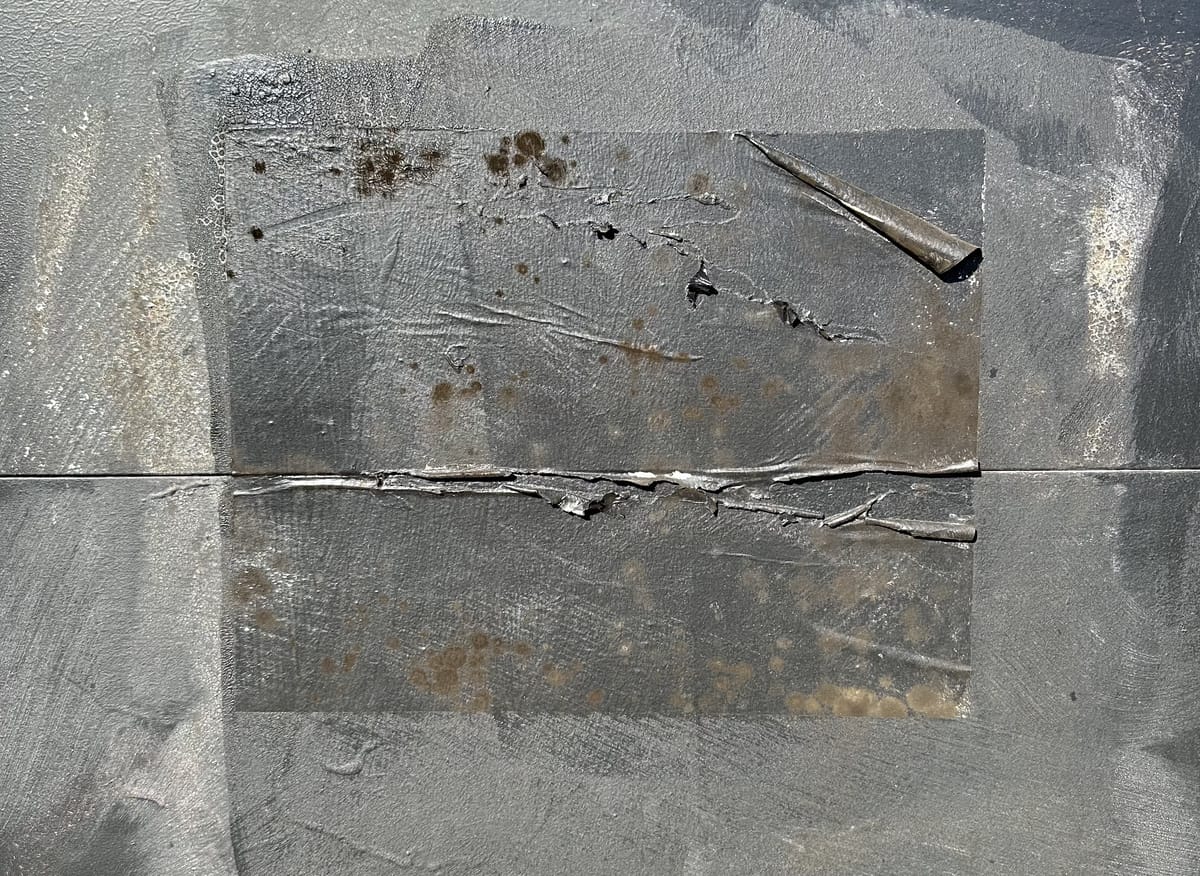
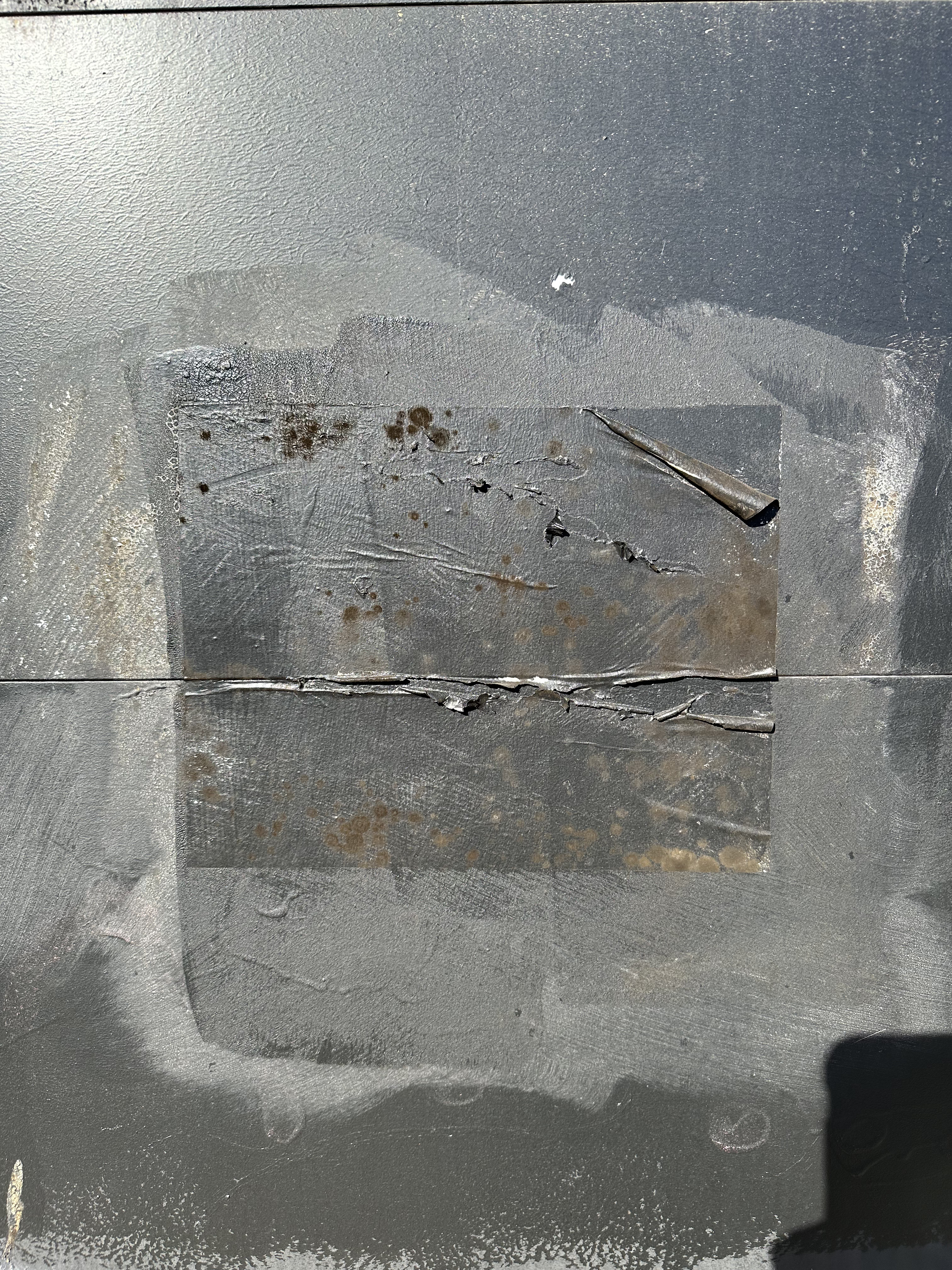
A day or two after my friend and I put up posters in my neighborhood, as soon as the glue dries, someone, a neighbor, comes around with a black marker. She (others have spotted her) blacks out the words and images like someone redacting court documents. Toward the start of the genocide, she drew little hearts to accompany her work. Now, she draws stars of David with smiley faces in the middle. She peels off what she can, but the wheatpaste (just flour and water) is strong. Now, she brings a razor.
Every other month or so, the city paints over all of it, and it begins again. More posters, more deranged scribbles, scratching and slashing with her razor. In some places, the scratches and slashes reveal another poster underneath, already blacked out.
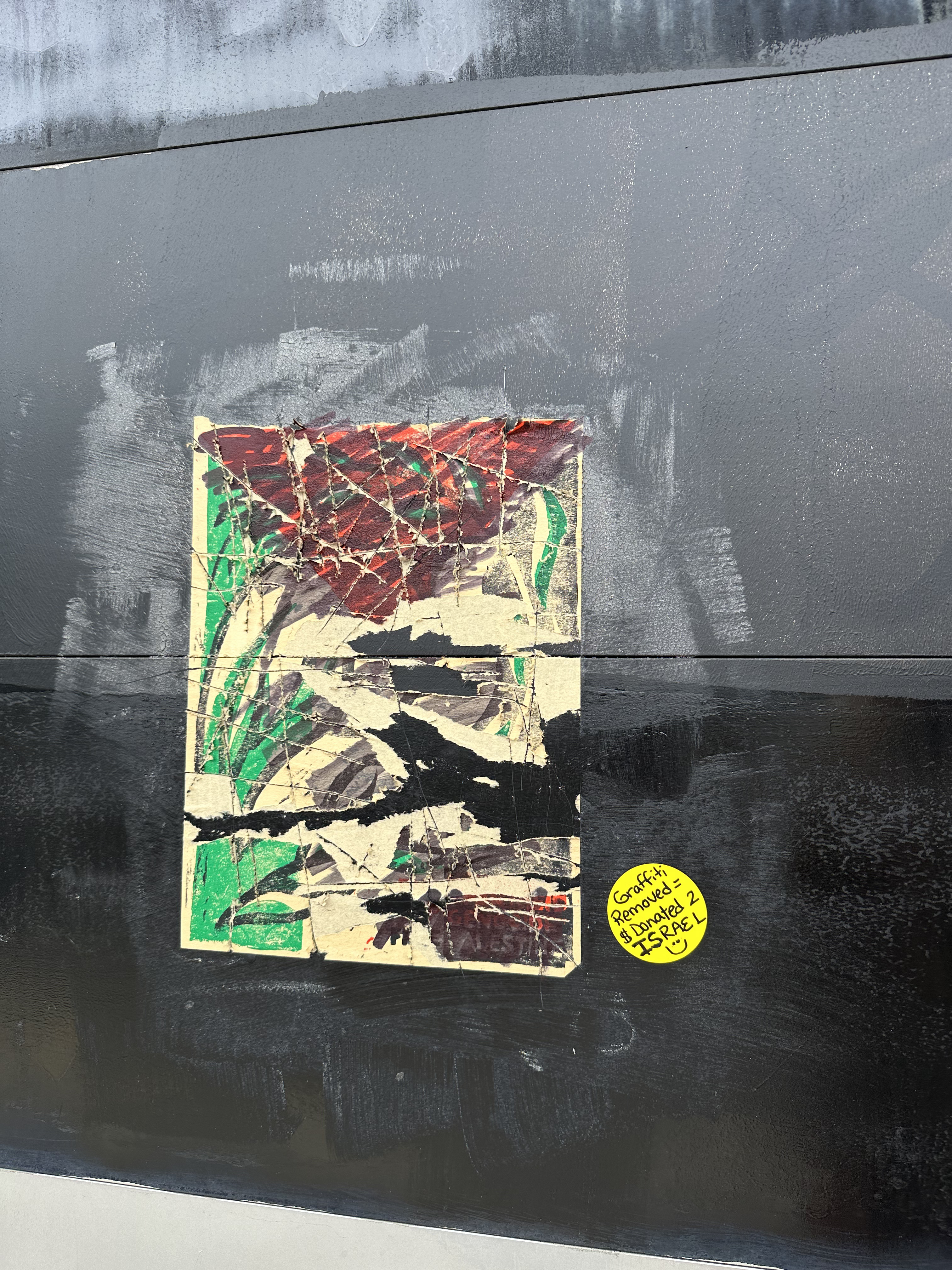
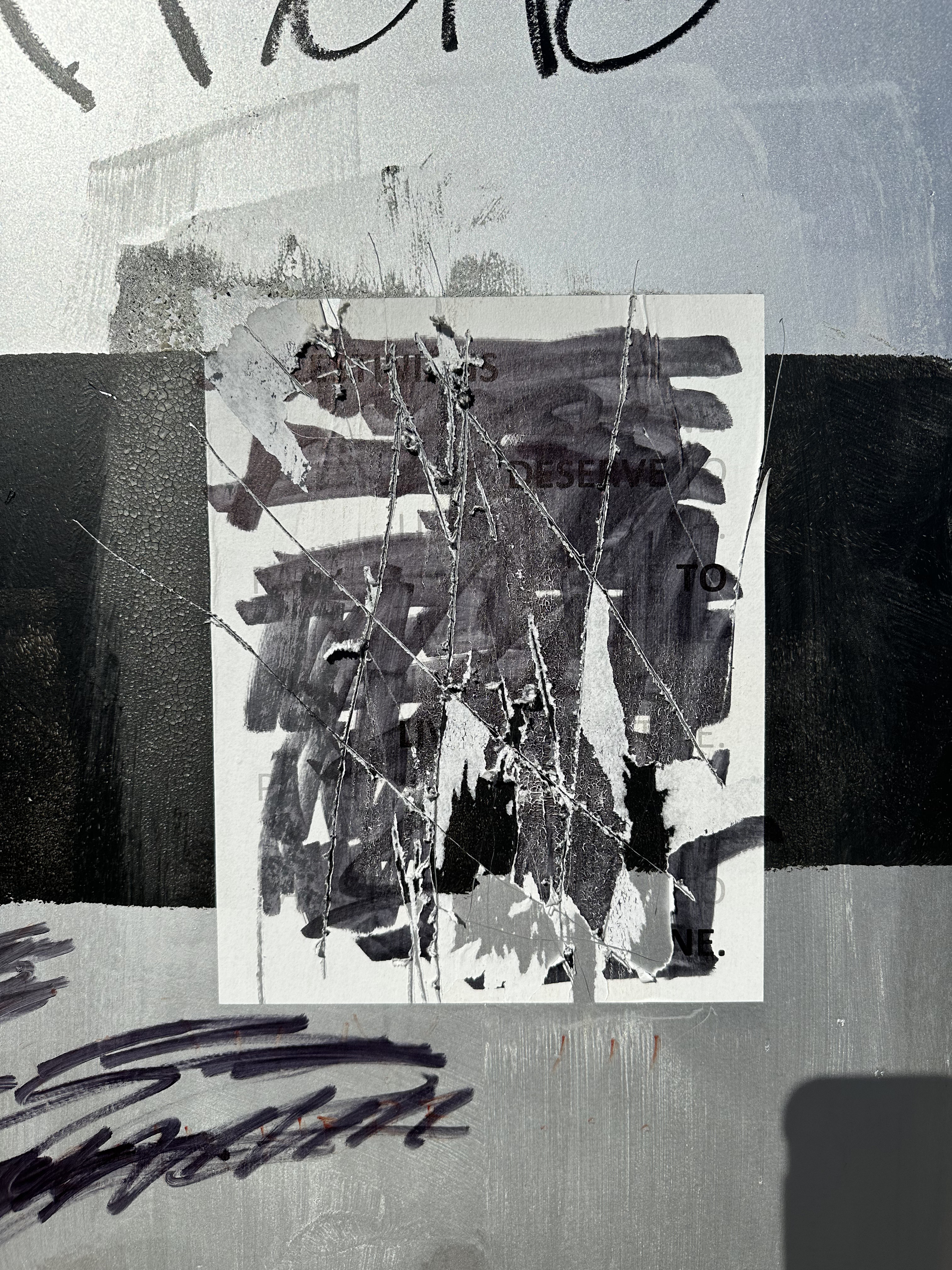
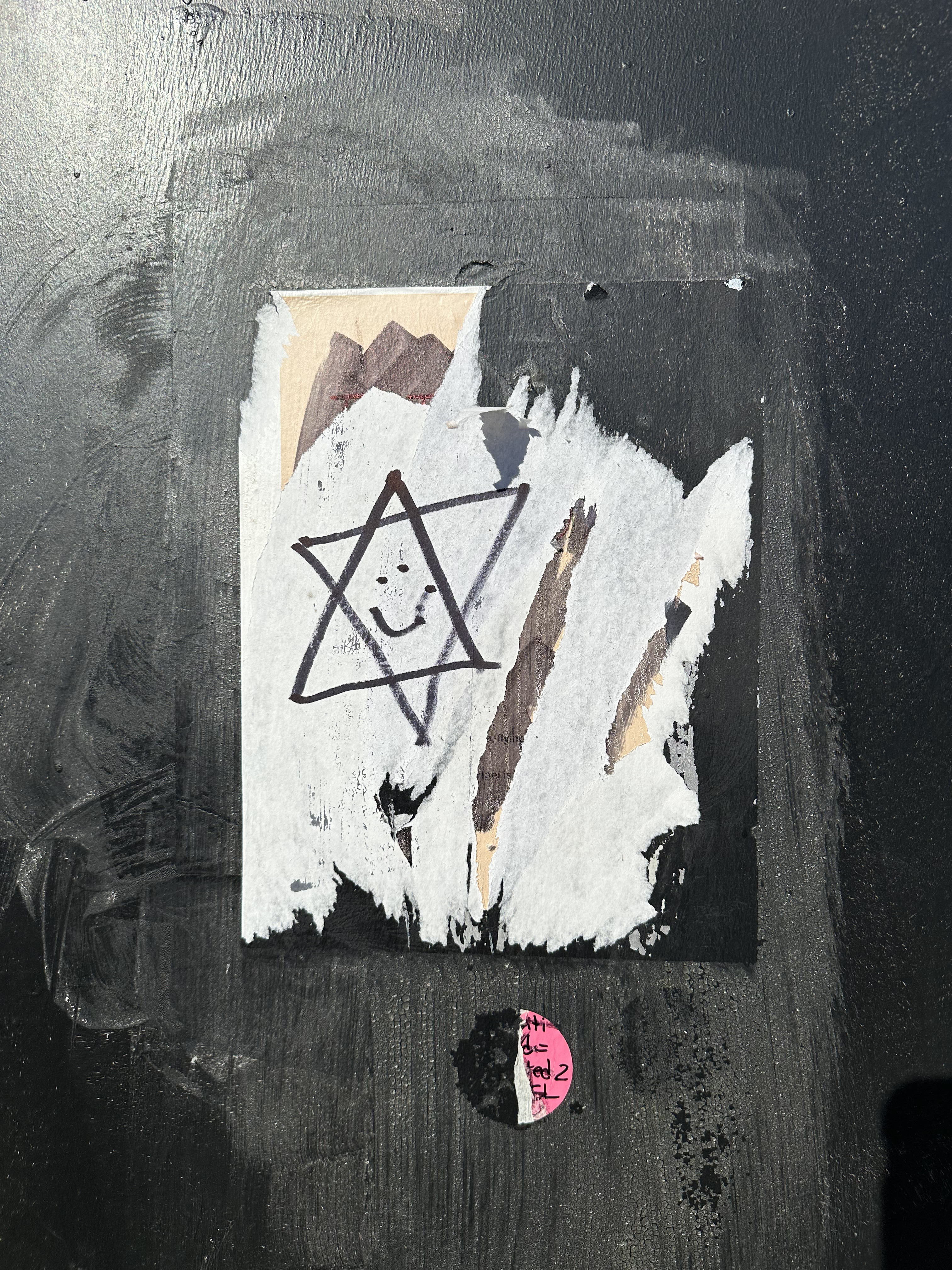
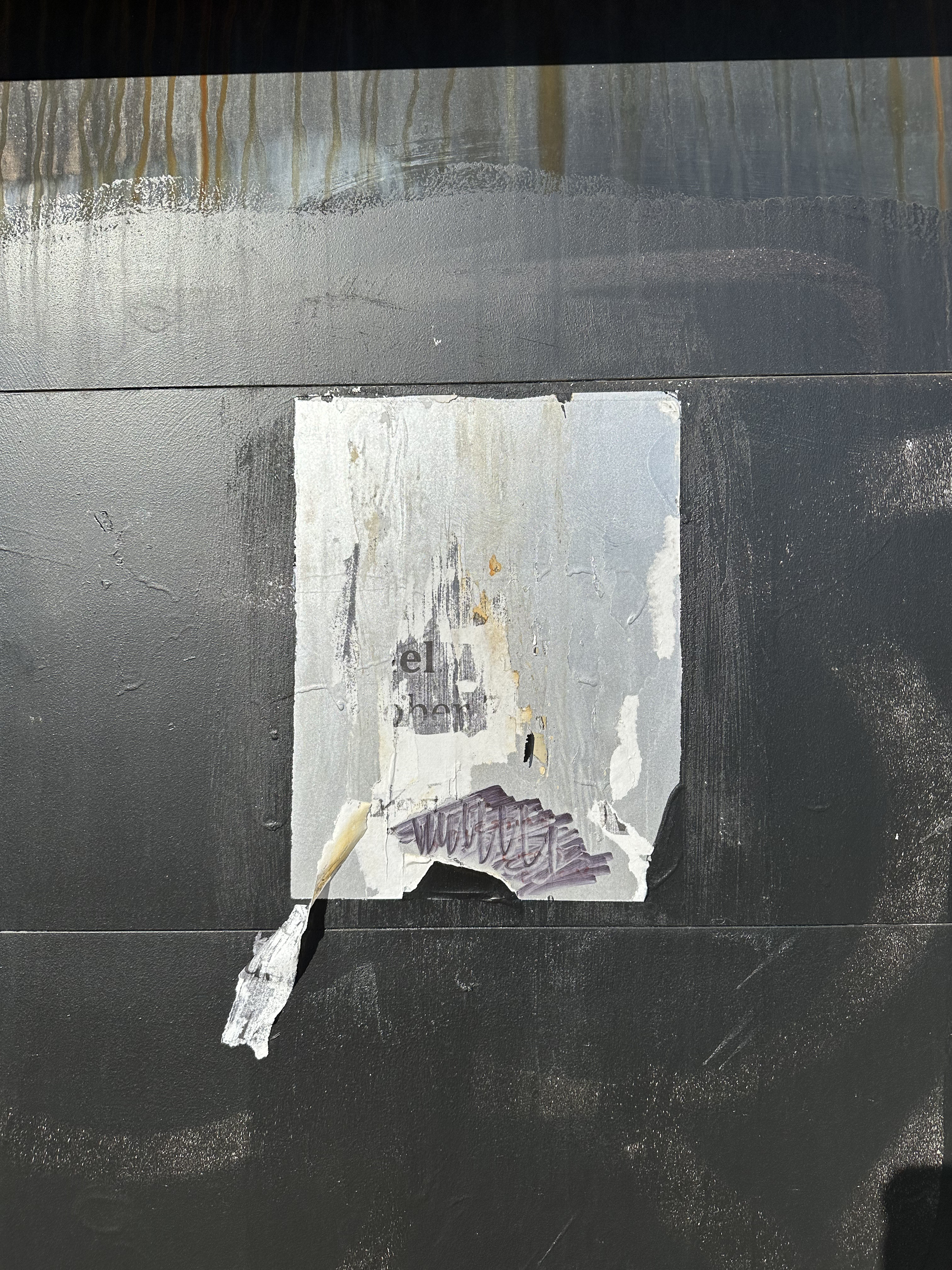
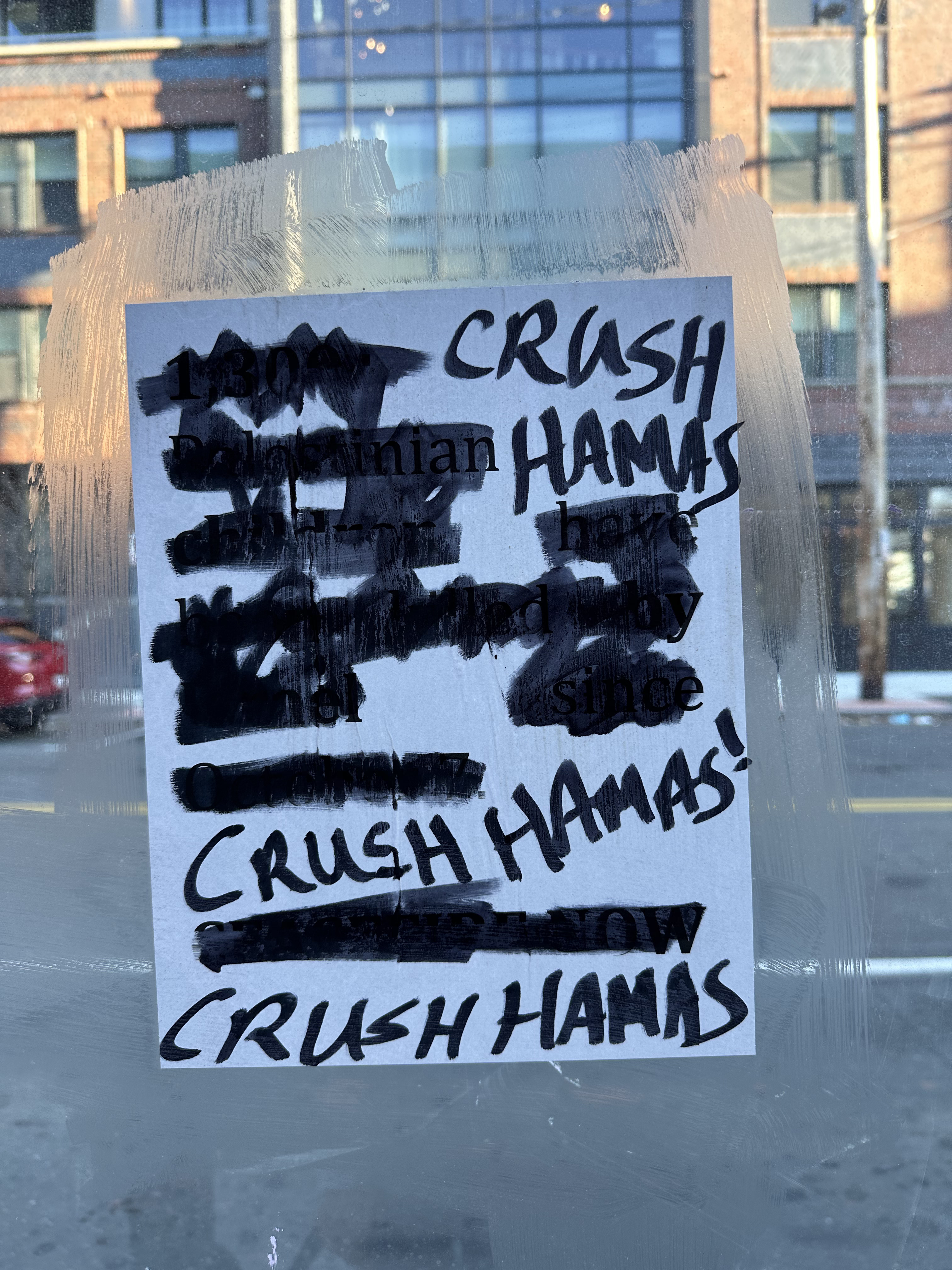
A few books with upcoming release dates speak of an “after Gaza.” People were attempting to imagine an “after AIDS” years before medication was discovered that could suppress HIV. What is “after Gaza”? The genocide is continuing, with evacuations being issued again for the northern part of the strip. Israel’s assaults on Syria and Lebanon are expanding. Neither presidential candidate in the United States will do shit to stop American weapons being sent to Israel.
Palestinians have been writing, long before I knew to read them. They will keep writing. The rubble will shout its history. The disciples will keep yelling. The desert will interpret. The posters will bear their small witness in their maiming. Witnessing genocide is a cacophony of mourning and rage. Who is anyone to keep silent?
Homodoxy and the Rearview support the Palestinian Campaign for the Academic and Cultural Boycott of Israel (PACBI). To familiarize yourself with PACBI’s guidelines, click here.
Thank you so much for reading, and consider supporting Homodoxy and The Rearview with a subscription.
Sam