The Prime of Miss Destiny

I.
Who was Miss Destiny when no one was looking? Who was Miss Destiny in the off hours? Without her name, who was she?
I don’t know and a long time has passed since she was living in the vicinity of Pershing Square, a long time has passed since Pershing Square was replaced by another park also called Pershing Square, but bearing no resemblance to the place where Miss Destiny first caught the eye of John Rechy while making her afternoon rounds. During the 1850s settlers camped there, on the outskirts of the Pueblo de Los Angeles, beside a stream that ran down from the Arroyo de los Reyes (now called Echo Park) and across the southwest corner of a five-acre stretch of land which would, in 1866, be dedicated La Plaza Abaja by mayor Cristóbal Aguilar, and later St. Vincent’s Park, Los Angeles Park, 6th Street Park, Central Park, and then, in 1918, Pershing Square.
Sometimes, for as long as anyone remembers or as long as government offices keep records, the same name corresponds to the same place, sometimes the same name to a different place, sometimes a different name to a different place; the same name can be used to conceal a change in nature, a different name can be used to reveal it, or to suggest a change when none is visible, i.e. a promise of change in function, if not in material. The same name can be used, on the other hand, to suggest a place can become someplace else and not forget what it was, to suggest a place can change in both material and function while retaining a kind of memory, to suggest a place can retain some constant quality—if not in essence then perhaps in part, or if not exactly in essence or in part then in identity, which is a way of describing space over time, i.e. the ‘sheafs of space’ that adhere to one another, that occupy the same area simultaneously across different times, or put simply, the meanings a five-acre stretch of land accrues by retaining its location while all the variables of that location change. And a name can signify that quality. And so Pershing Square signifies that quality, because since 1918 its name has not changed.
According to LA Times staff writer Cecilia Rasmussen’s 2007 essay, “The (d)evolution of a downtown landmark,” at some point before Pershing Square became ‘Pershing Square,’ George ‘Roundhouse’ Lehman, a German immigrant who ran a nearby Biergarten, planted shrubs, cypresses and fruit trees thereupon; later someone else built a pavilion, someone else erected a bronze memorializing Southern Californians who died in the so-called ‘Spanish-American War,’ and in 1910 John Parkinson (presumably, rather, the landscape architects in his employ) planted high Italian cypresses and bamboo copses and constructed an enormous fountain “braced by four life-size cherubs,” a decade or so before someone else planted birds of paradise and banana trees and the vertiginous palms repeatedly described by John Rechy in “The Fabulous Wedding of Miss Destiny,” the story that would later become the exemplary setpiece of his debut novel City of Night. Then more fountains. More statues. A historical cannon.
“And while the preachers dash out their damning messages,” writes Rechy, “the winos storm Heaven on cheap wine; hungry-eyed scores with money. . . gather about the head hunting the malehustlers. . . . And malehustlers. . . move restlessly about the park. . . . And the heat in their holy cop uniforms. . . the scattered junkies, the smalltime pushers, the teaheads, the sad panhandlers, the occasional lonely exiled nymphos haunting the entrance to the men’s head. . . . And—but mostly later at night, youll find, when the shadows will shelter them—queens in colorful shirt-blouses—dressed as much like women as The Law allows that particular moment. . . giggl[ing] constantly in pretended happiness. . . . And the trees hang over it all like some apathetic fate.”
Later the Square would be paved over with concrete.
II.
But even if concrete paved her stage, Miss Destiny hasn’t left. Hasn’t left, at least, a particular sheaf of space, or sheaf, at least, of paper—insofar as anyone remembers her, she still circulates that time and that place, that 1950s Nightcity of Angels—John Rechy, some 90 years old, draws breath even today, so perhaps there are others who saw or knew her when she was living, if she isn’t anymore—and though, in 2014, Rechy wrote that she wasn’t calling him anymore, as she had in the evenings for years, I like to think she is living somewhere, living easy in the third or perhaps fourth prime of her life, quoting different lines of Shakespeare to the same man, over and over again, instead of quoting the same lines of Shakespeare over and over to different men, that she has had, if not a wedding, then something better, something composed not only of fairystuff but of fact, something like a domesticity, because a cloud may be a place to dream but it is not a place to sleep.
But I don’t know and Miss Destiny may in fact be buried in the dirt with her sorrows, Miss Destiny may have died alone in a mess of acrid chiffon without a twinkling diamond to her name. Very little of the faggot-woman-thing called Miss Destiny is a matter of record, and the foremost document of her existence renders her memorably but solely in the spectacle of Herself, as a sighing and wastrel Queen. We can’t see her when she isn’t being seen. We can’t know her when she’s not playing at least two games—the money or drugs game and the ‘I feel like a woman when you look at me’ game—two games and maybe more, the point is we only see her when she’s playing. We can’t hear her when she isn’t speaking to someone else, when she’s only speaking to herself, when it’s only the woman and the void, the woman named Miss Destiny and the void with no name at all, but both part of the same person. The page is a window and not a curtain. She is afforded no privacy.
Mediated by Rechy, Miss Destiny says: “Oh I am, as everyone will tell you, A Very Restless Woman—”
Rechy says: “Unpredictably occasionally she comes on with crazy Southern sounds cultivated, you will learn, all the way from northern Pennsylvania.”
Miss Destiny: “I learned things in the countyfawm I didnt know before—like how to make eyeshadow out of spit and bluejeans—”
Rechy: “She—he (Miss Destiny is a man)—went on about her—his—restlessness, her husbands. . . looking alternately coyly and coldly at Chuck then me seductively: all of which you will recognize as the queen’s technique to make you feel like such an irresistible so masculine so sexual so swinging stud, and queens can do it better than most real girls, queens being Uninhibited.”
Miss Destiny: “They nevuh! can forget me—of course I loved Chuck once too. . . such a butch cowboy, look at him—but havent I loved every new hustler in town?” “Chuck lived with me, dear. . . as just about every studhustler has at one time or another, I must add modestly. But, baby, it was a turbulent marriage (that means very stormy, dear).” “Didnt I tell you all my exhusbands are jealous of me?”
He can’t help reflecting her Glamor, her particular but archetypical decadence, her subsistence on fantasy, and that kind of tranoptical paranoia—expressed through the frayed, irresolute hitches, the glitchy nonsequiturs and jarring cul-de-sacs in her, as it were, speculative autobiography, delivered monologically to John Rechy in a booth at the 1-2-3; and through the agitated fluttering, like a trapped moth, of her movements, struck blank—frozen in a half second of jerky, iterative motion like the projection of a damaged VHS tape—halfway through a gesture of feminine abandon, by a sudden gap of void—in her mind, in the room itself, as chilling as the nullity of a ghost, a presence of absence—or a sudden awareness of the possibility that someone, somewhere, was watching her, was reducing her to a man in rags. Likely someone was, but we all know how the accumulation of memory (memory in a minor key; memory like the rutted roads that the Wheels of Consciousness travel—the wheels deepening the ruts day by day, the ruts compelling the wheels to deepen them; memory of an experience so frequent and so global, so habitual and finally fundamental to the texture of consciousness that it fails to register anymore as a thought, is simply a manner of living) becomes a haunting, so that as long as someone could be observing us, someone might as well already be.
We know these mannerisms, too: these equivocations. Perhaps contemporaneous readers did not, but given contemporaneous representations, we can suppose they did. Christine Jorgensen was old news, already reduced to a circuit (circus?) speaker, and soon after April Ashley, outed and outcast in the English press by her own husband, was publicly erased from the pages of Vogue, while Amanda Lear, winking from the rose bushes in Salvador Dalí’s private garden, was crowned Europe’s Queen of Disco. Christine published her oddly named memoir, A Personal Autobiography, three years after Rechy’s City of Night; a decade later Severo Sarduy published Cobra—in Paris, the same city where April and Amanda had once performed at the haute monde’s preferred all-transsexual cabaret Le Carrousel, the inspiration, I suspect, for the novel’s “Lyrical Theater of Dolls”—and then, in 1976, Manuel Puig published El Beso de la Mujer Araña, whose English translation, Kiss of the Spider Woman, was under contract before the book was released in Argentina. All of which is to say: when Miss Destiny arrived on the scene, an archetype was already available for use, whether or not its users were aware they were merely reproducing or at best epitomizing it, making it memorable and moving—half-symbol, half-human—despite or even because of its categorical limitations.
Despite: for these three men, all gay, a Doll was first and foremost a kind of ‘canary in the coal mine,’ a perfect allegory for the irresolvable contradictions churning, magmatic and unstable, within the ostensible logic of so-called social relations, or between political and aesthetic avant gardes, between fact and fiction, between signified and signifier, between mask and self. This sort of expository, ‘theoretical’ statement bores me to write. . . And I wouldn’t have to if Queens and Dolls and transsexuals and travestís had been allowed to publish novels in the 20th century . . .
Because of: beyond poetic intention, though in some sense glimpsed by it, funhouse-style (these authors, daring to represent the Doll, ushering her into Literature and reinscribing thereupon the imaginative dead-ends of their milieu, were also describing, making a map of those same dead-ends), there is something moving about these women, shaped and reshaped by their novels, shaping and reshaping them in turn, warping form with the force of their voices.
Each has her particularities—Miss Destiny loves Shakespeare, Molina loves classic Hollywood film, and Cobra is a cabaret star, first chair in the as-it-were “Lyrical Theater”; Miss Destiny wants a wedding while Molina wants a man’s love and Cobra wants to “shrink her feet,” i.e. get her pussy in Tangiers, but all of them experience a synonym of the same desire, all of them suffer from the same belief—if I only had a brain, if I only had a heart, if I only had the nerve: they are acolytes of Art, who believe life can be, by faith and by will, induced to imitate it—so all of them make the same mistake: attempting to transform from Queens into Women, attempting to become Real. Rechy, Sarduy, and Puig punish them, according to their own tastes, by mockery, mummification, and mortal wound: Miss Destiny, though she achieves her wedding (according not to the ‘facts’ of the narrative itself but to its narrator’s imagination, synthesized from gossip or, legally speaking, hearsay) is always and pitifully a wannabe, who disappears from the novel into her own fantastical afterglow (i.e., unreality—she has no life, Rechy can imagine no life for her, after her wedding); Cobra, though she achieves her surgery, is then used—first mummified, then killed, sort of—by a drug-dealing Buddhist biker gang in a hagiographic ritual, becoming more than human at the price of her humanity; and Molina, though she achieves the consummated love of a man (Valentín, a leftist political prisoner, her cellmate), is shot and killed after her parole while delivering a message to his comrades, having been used (surveilled and discarded) both by the military and by the revolutionaries themselves, having been nothing more than the scene of the crime.
Anyway, despite the terms of my engagement, I love these books; they are part of my gaze, they mediate my reception of daily life and the literature that colors and occupies my own off-hours. I have a hard time writing about anything I hate. I’m not inclined to enumerate faults unless they’re stuck like shards in figures of beauty. Faults become interesting in their entanglement with virtues; virtues are pleasures in themselves, whether interesting or not. Any true story is the story of this entanglement, and any true story is interesting. So I am incapable of hate-watching and hate-reading—and I’m trying to limit my gossip to the useful and necessary, to forego the bitterly entertaining, i.e. the offspring of my own insecurities. Those arrows only wrap around and pierce me instead.
III.
Miss Destiny is ‘Miss Destiny.’ Or ‘Miss Destiny’ is ‘Miss Destiny.’ Her name was not an invention of Rechy’s fancy, but a historical fact, honey! She is on record twice, and off the record, I’m sure, many more times. If there were more records I’m sure she would have gladly offered her two cents, or at least two kisses. Bisous bisous
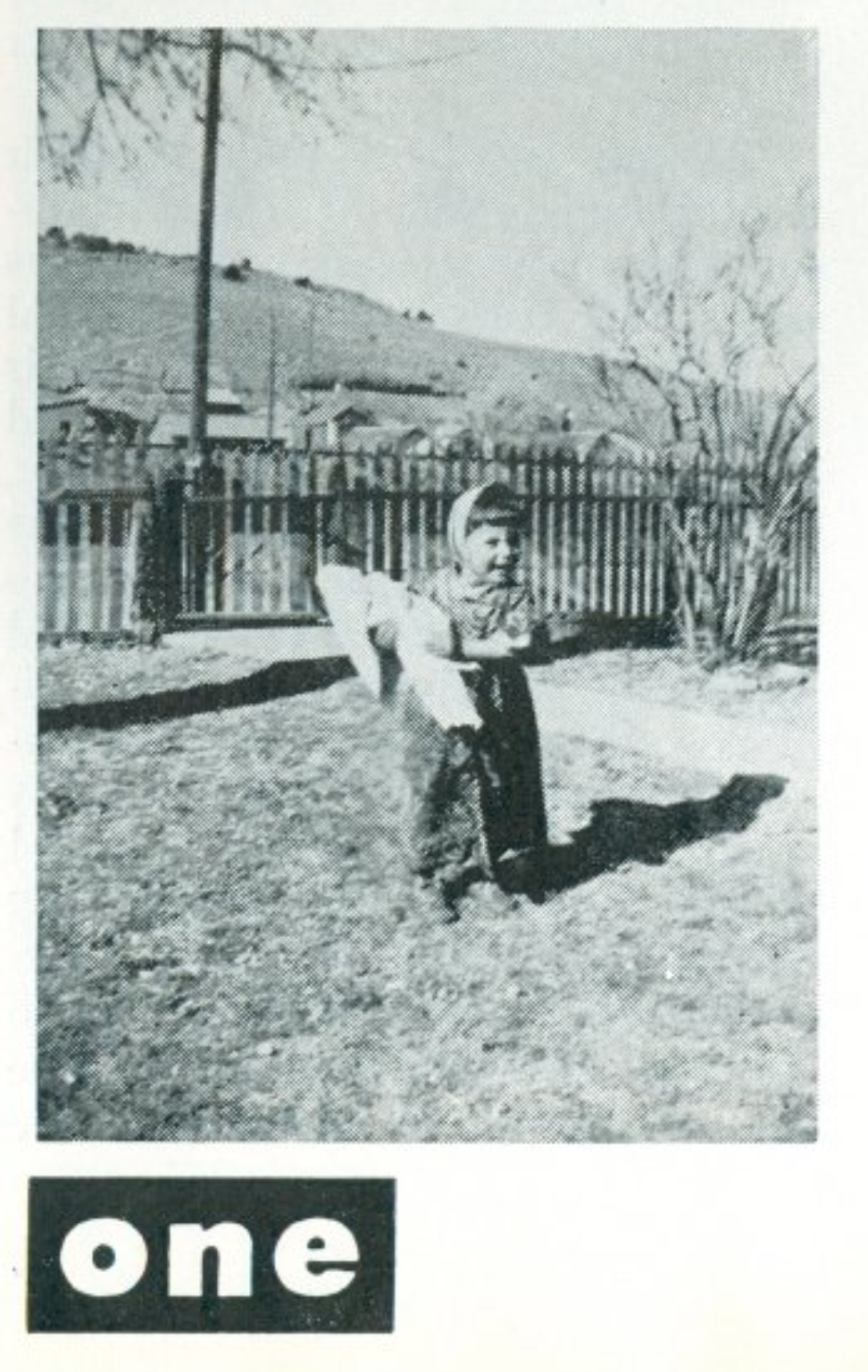
One year after City of Night, Miss Destiny debuted in the pages of Los Angeles gay journal ONE, the homosexual viewpoint, whose name was sourced from Scottish essayist Thomas Carlyle—“A mystic bond of brotherhood,” he wrote, “makes all men one,” if only that were true—and whose pages had been declared obscene a decade earlier by the US Post Office. Two fullpage black-and-white photographs of the woman herself—in sequined ballgown and opera gloves, then in a mink and black slip, beside a vase of flowering plants—preceded the interview, which was titled “The Fabulous Miss Destiny.” In 1971, the same interview was reprinted in the pages of DRAG, the magazine about the transvestite, under a new name and with far less editorializing:
The change of name (and, without a doubt, the reduction of unQueenly interpretative noise) casts over her words a rather different glow; what first resembled a tabloid stunt now suggests, not without a coy giggle, an etiquette book, such as would have been authored at the turn of the 20th century by a society lady: and given the opportunity, my love, she Hollywould! But it hints, too, at the true cant of the contents, whose anonymous authors took an opportunity beneficial to them (who can know the behind-the-scenes gay politicking between Rechy and his peers in gay Los Angeles? who can know whether these editorial homosexuals wished to slight the hustler who’d snubbed them at the bathroom stall?) and ultimately beneficial to Miss Destiny, too: a confutation of the “Fabulous Wedding,” a tearing of the silver screen to reveal, behind its durable but fundamentally vulnerable scrim of Spectacle, the mundanity of Miss Destiny.
In DRAG, she is not grandiose, not drifty or skittish either, insofar as her speech is concerned; she is matter-of-fact, what some call “down to earth,” (that phrase has dogged me for years) and precise, cogent, clear-eyed: “Queens,” she says, “are fundamentally honest. Misguided though you may believe us to be, ill-advised though you may find our behavior, and mistaken though you may think our attitudes, we at least stand on our own two feet proclaiming exactly what we are.” She is aware of the mannerisms of her mind and the distortions of desire, which conspire together to manufacture her fantasies; whether she is prey to them or not, she knows their mechanisms—so she is not, as Rechy would have her, identified entirely with Miss Destiny; nor adrift in twilight sleep, under the anesthetic of an affected femininity, nor swept up wholly in the simulacrum of her own staged dissipation, dazzled by the glare of so-called marquee bulbs that are in fact nothing more than the headlamps of a police cruiser: she is not a doomed and pitiful faggot—a fool in furs—sustaining, at all costs, the delusion of being a duchess. She knows; knows how she is seen and attempts, as anyone must, to make a life for herself—to find a little bit of happiness, my god—beyond the social, imaginative and legal proscriptions of Los Angeles, California, by which her reality is delimited, compressed, forced to crystallize for the wandering eyes of Rechy, et al. She is, one might say, an eminently reasonable woman.
“I am gay,” she says, “24 hours a day.”
She says: “A homosexual has to make a home for himself even if it is only one room and he is the only one in it.” “Pershing Square lets you be yourself better than any other place I know. . . . That’s why those of us who don’t mind facing what we are gravitate there.”
She says: “Through the chain of painful experiences, I have learned how to understand impatience, unkindness, dishonesty, cruelty, and, of course, prejudice. It doesn’t always help me to understand, but I at least know what is going on. I always try to keep my relationships with other people simple. . . . I want to love people and be loved in return. Love, to me, is supreme. It is the only thing I know that brings me happiness. A lot of people don’t understand me; what can I do about it?” “I can only answer that my whole outlook and point of view has always been that of the female.”
When, in the history of gay men writing The Girls, have we read phrases as forthright as hers? When has a queen been as simple as a person experiencing desires and pursuing their fulfillment?
Rechy lacks an ear for this Destiny. Embellishment and excess are part of her personality, but so are wanting and needing. Flights of fancy are part of her personality, but so is a close attention to detail. She is as practical as she is fantastical, as analytical as she is astrological. The anonymous authors catch this. In ONE and then—with a touch more sagaciousness—in DRAG, they write:
“
It has been our observation that most queens who have been around at all show a certain insight into the problems of living, with the exception of those problems having to do with their own motives. [And who, after all, is exempt from that? Emphasis my own. The editors of DRAG cut this aside, as well as a number of longeurs regarding Miss Destiny’s carriage and, if you will, physical psychology, which reinforce rather than rebuke the anthropological and dehumanizing remove of Rechy’s gaze. And the gaze of anyone looking at us like specimens rather than sisters. It’s not surprising that the trans publishers of DRAG would present her as subject rather than, as did the homovestites of ONE, object. I’ve been a transsexual-on-the-sidewalk so long I didn’t notice this difference until my editor pointed it out. The Wheels of Consciousness go round and round. . . and the ruts go deeper in the ground. . . – AM] This insight probably comes from the fact that their minds are continually working, always analyzing their own and other people’s motives. They are always on guard, and always trying to figure out how anyone could find their behavior as being in any way wrong. John Rechy completely overlooked this sagaciousness in Miss Destiny and her friends. In his best-seller, City of Night, he portrayed all queens from Pershing Square to Harlem as extreme individuals who appear outwardly and socially absurd. This, of course, was all the queens allowed him to see because although the queens’ world is not all camp and carry-on, it is all they will allow the general public and their unsuspecting sexual companions to believe about them.”
What psychoanalysts termed “manic defense”—this social absurdity, this camp and carry-on, the carry of it all—is not an indulgence, a symptom of our involuntary excesses, but a hallucinatory distraction that conceals us in plain sight. Ostrich feathers, like shrieks of laughter, are a kind of camouflage.
IV.
It’s not that Rechy misses the point entirely—every element of Miss Destiny can be glimpsed in the hot, dusty afternoon light, the perennial barroom murk, of his tragicomic vision. It’s a question of emphasis. John Rechy has a point of his own to make. She epitomizes, for him, the masks each actor wears in Pershing Square: the trick, the queen, the stud hustler. She is its most extreme expression and therefore its most unmasked expression: her mask is most obvious and carries the largest measure of symbolic charge. Her humanity is filtered through her potential meaning, rather than the other way around. I am grateful that he, imperfectly and for his own ends, but with frenetic— exquisite— pathos and poetry, grafted her into the English language.
And for her part, she milked what minor celebrity she could from his, as it were, ‘diamond in the rough.’ That’s good. It’s not like he was sending her residuals. He’s spent his whole career profiting from her rarified flair, from her red, red rair.
In a 2007 lecture at the University of Texas, El Paso, modified and published as a 2014 essay in the Los Angeles Review of Books, Rechy writes: “Christopher Isherwood gave me what I thought was sage advice on using real people in one’s writing. He told me, ‘You can question their morals, call them liars, expose them as thieves—as long as you describe them as attractive.’” I’m not sure this is true of Miss Destiny, whose beauty and affect he mocks while he celebrates, even after the fact. He claims her as his own creation; claims that he had as much a hand in creating her as she did herself: “Subsequently,” he writes, “she absorbed the characteristics of my character; she told her stories with my embellishments, claimed they were her exact words,” as a result of which, he cannot help but note, “she landed on the cover of ONE magazine, in full wedding drag. . . and she gave a nasty untrue interview about me.” And he doesn’t hesitate to slight her one more time. “For years afterwards,” he writes, “she would call me, always very late at night and in a boozy voice, and she would ask me to please inform whomever she was with that she was indeed ‘the fabulous Miss Destiny’ of my novel. Of course I obliged. A few years ago the calls stopped; and I hope—assume—Miss Destiny has kept her intention to ‘storm heaven and protest.’” Was it so necessary to describe her voice as boozy? What did he mean to imply about her by offering her this single latter-day adjective? I suspect we are supposed to interpret her as a has-been who owes what few pleasures she still enjoys to the fame he granted her. More telling, to me, is that Rechy betrays here a total lack of curiosity about her circumstances beyond his effect on her life. Even fifty years later, he cannot conceive of her solitude. The closest he ever came was telegraphing this quotational aside from Miss Destiny in City of Night:
“And at night in bed drowning in the dark, I think tomorrow will be just like today—but I’ll be older—or I come unexpectedly on myself in a mirror or a reflection in a window, and it takes my breath: Me!! . . . And I think about my wedding and how Fabulous I’ll be—but I want to fly out of my skin! jump out! be someone else! so I can leave Miss Destiny far, far behind. . . .”
And perhaps she did. I want to know Miss Destiny in her dotage. I am interested in a faggot-woman-thing who has outlived her usefulness, has been reduced to her own mirror because no one is looking at her anymore, not like that. I want to prepare myself for old age, want to believe I can survive the end of my own hard-won beauty, to the tune of Irving Berlin’s “Sisters.” My hair in curlers, my mouth full of bon-bons, I want to study, under cover of night, City of Destiny. Or: Miss Destiny’s Secret. Or even: Drag Me To Hell: How to Twinkle As You Wrinkle. Really I just want to sit on her back porch and listen to her talk. I want to hear about her sisters, the ones who survived, the ones who didn’t, the ones who told you and the ones who left you guessing, and Our Ladies of Perpetual Stealth. “You may be surprised,” she says, “at the number of long term friendships queens have with each other. They may have had the same trick in 1944, and they have been friends ever since. These friends will meet almost every evening somewhere in the Square or on their rounds. And they will do almost anything for each other until they fight over the same man. As outcast among outcasts, queens have a strong tie that bonds them together. . . . I know of more than one queen who has risked self incrimination to help her friend. You don’t find this same kind of loyalty among other homosexuals who believe that their lives depend on camouflage.”
Miss Destiny implies what Camila Sosa Villada realizes: travestís, queens, transsexual women beyond the eyes of men, the fairweather fairies, the stud hustlers and the trick daddies. And though Miss Destiny didn’t, we have Las Malas and the crônicas of Pedro Lemebel to preserve some record of that living history; we have Sosa Villada writing, of a pair of shapeshifting travestís: “The two animals comforted one another, hidden away from the world, in an incomprehensible but rich, expressive and bitter language.” That is a language I know, too, in my own way; a language I have spoken on Red River Street in Austin, Texas, at the Side Bar and Better Days—and down on Pleasant Valley at Frazier’s Long and Low—and on the east side at Electric Church—and in the nameless houses, too. What remains, for me, is the question of queens who, by accident of fate and inflammation of kinship under pressure and behind enemy lines, fall in love. Not so-called transbians, who share their own subculture, but queens—queens who always pursued men until they looked one another in the eye one day and realized:
But what we realized is a bitter, rich, and inexpressible secret. And it happened, that’s all you need to know. It happened in plain sight, under cover of laughter. As light and as layered as ostrich feathers.
Aurora Mattia is from Texas. Nightboat has published two of her books: a novel called The Fifth Wound and a story collection called Unsex Me Here. Her third book, another novel called Seven Come Eleven, is coming out from Nightboat at the start of 2028. Now she’s writing a collection called “Green-Broke,” half stories and half essays. It doesn’t have a publisher yet.
Keep Reading
Mattia’s collection Unsex Me Here was featured previously in The Rearview:
 Samuel Ernest
And Pedro Lemebel, whom she mentions, is discussed here:
 Samuel Ernest
It is a real pleasure to bring you this original essay. The generous contributions of Homodoxy’s donors made it possible. To help The Rearview bring you new work by excellent writers, make a one-time or monthly donation to Homodoxy here. Donations are tax-exempt to the extent permitted by law.