Their Own Distinct Residue
an interview with William Stell on the history of gay evangelicals

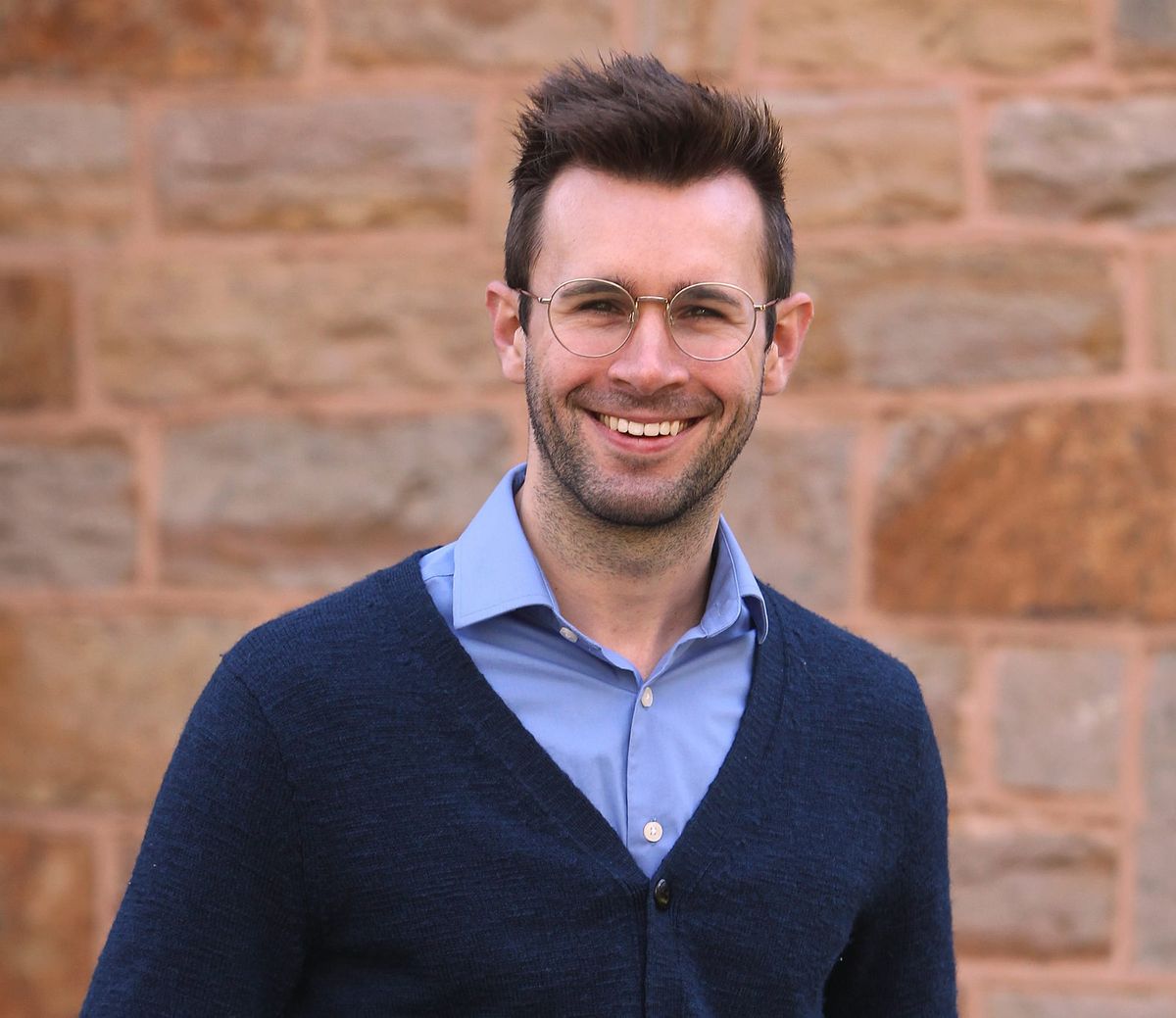
William Stell is an Affiliate Visiting Fellow at Princeton University’s Center for Culture, Society, and Religion. Previously, he was a Faculty Fellow in the Department of Religious Studies at New York University. You can find his writing in the Journal of the History of Sexuality, Theology & Sexuality, Disability Studies Quarterly, Church History, American Religion, The Immanent Frame, ARC, Syndicate, and elsewhere.
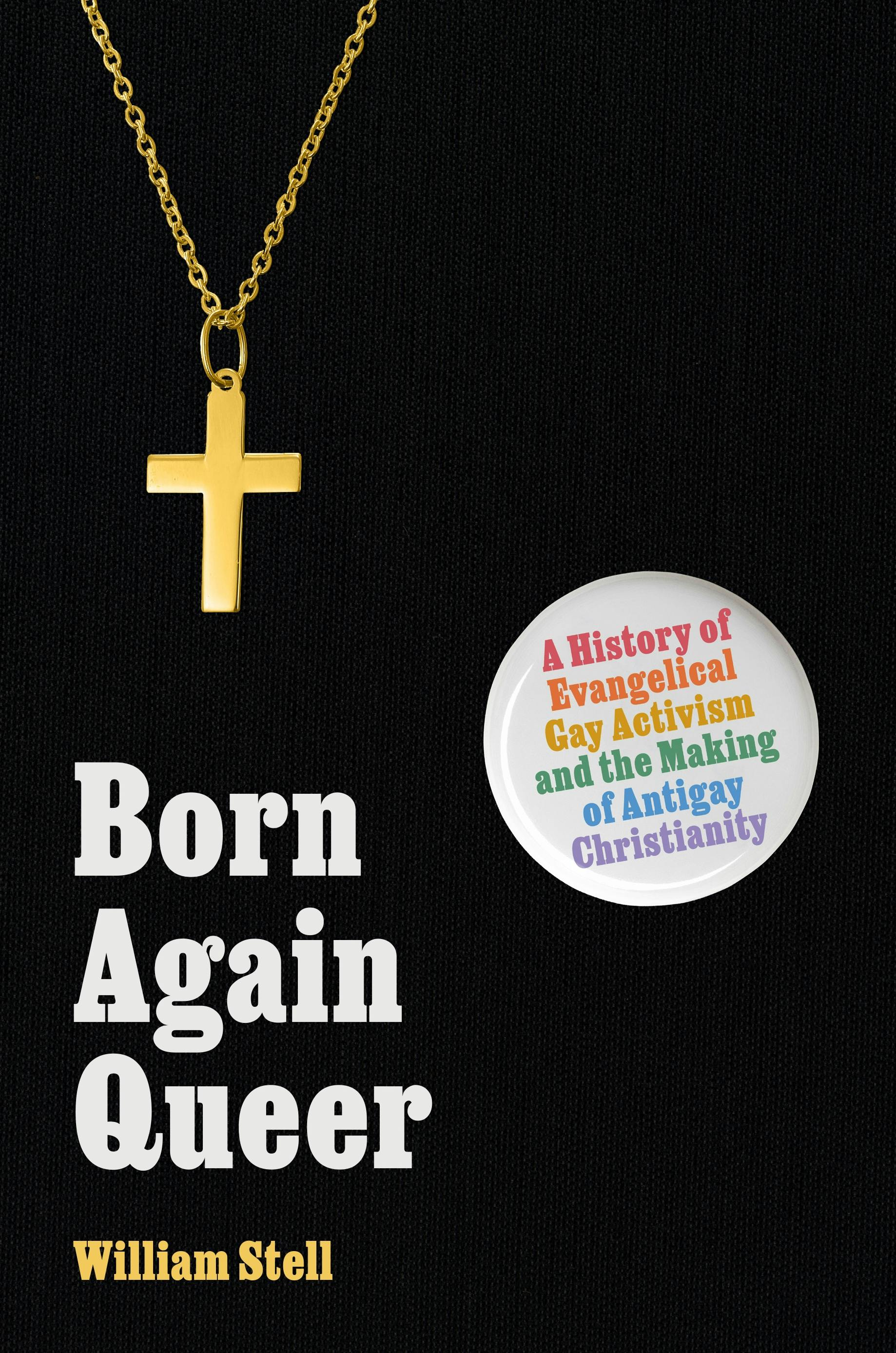
William’s first book—and the subject of this interview—is Born Again Queer: A History of Evangelical Gay Activism and the Making of Antigay Christianity. The book was published this year by Princeton University Press, and you can buy it here.
I first met William at the American Academy of Religion (AAR) in… some years ago. William is extraordinarily smart and kind (people used to say dear), and he has become a good friend. We serve together on the steering committee of the AAR’s Gay Men and Religion Unit. I am so glad to interview him for The Rearview.
I asked William about touring with Born Again Queer, his relationship to the histories he tells, what his book helps us see in the present, and more. This interview was conducted by email over the last month.
Samuel Ernest, PhD
Editor
SE
Congratulations on the book, William! It is excellent scholarship that will give evangelicals and those who study them much to think about. It has certainly given me a lot to think about.
You went on a national tour to promote the book. What has Born Again Queer’s reception been like so far, and what kind of questions have you been getting about it at those events, and more generally? Have there been any surprises?
WS
The tour has gone wonderfully so far. Lots of enthusiasm, no real nastiness. When speaking to churches, my main goal is to show them that Christians’ conversations about LGBTQ+ issues should be informed not just by the Bible but also by history (including the history of biblical interpretation). Audiences pick this up pretty quickly, and so they ask all kinds of questions about the history of evangelicalism and Christianity more broadly as it relates to sexuality, gender, and politics in the United States. It’s enormously gratifying to watch as audience members grasp the liberative potential of this history.
As for surprises, I’ve been struck by a word that several folks have used to describe their experience of reading Born Again Queer: healing.
While the book’s introduction and conclusion include a few more pastoral lines, these folks weren’t referring to those lines. Nor were they, as I understood them, referring to the book’s historical narratives per se. Rather, they were referring to the critical analysis of evangelical discourse that I weave throughout the book. Born Again Queer illuminates the instability in evangelical talk of biblical authority, literalism, and inerrancy—and the consequent instability in their biblical interpretation (even and especially on matters that they insist are “clear”). In short, the book shows how evangelical exegesis gets stuck in its own power plays. Especially for queer people who have been attacked by such exegesis, this realization can be something of a balm.
SE
I had an experience like that while reading the book. It came where you step back from the history of gay evangelical activist Ralph Blair to speak about the history of evangelicalism more broadly. You write, “Talking like an evangelical means talking as if multivalent texts are not so, means declaring all manner of things ‘biblical’ and ‘unbiblical,’ means saying things like ‘the Bible clearly says’ over and over again, even and especially when the evidence indicates otherwise. The history of evangelicalism is a history of pretending that the Bible is clearer and more coherent than it is.”
Having been an evangelical trying to understand my own sexuality, I am acquainted with this approach to scripture. You name that kind of reading as a strategy, and you capture the maddening nature of the repetition that is necessary to make a set of texts as complex, rich, and troubling as the Bible into ahistorical prohibitions. Evangelical hermeneutics beats the Bible into submission to beat people into submission. Of course no one wants to be treated that way. Clear analysis can be healing.
You are an historian, and you are also a gay man and an ordained minister in the United Church of Christ. How did you think about those various offices or roles while writing the book?
WS
At every step along the way, Born Again Queer was enabled and enriched both by my gay identity and by my religious background (meaning my teenage and college years in evangelical communities). This is where the passion of the book comes from. This is what granted me access to numerous crucial sources. (Ralph Blair, for example, would not have granted me access to his personal papers if I had not been able to speak his evangelical language with fluency.) This is why the book, to borrow a colleague’s words, “captures so well the moods of evangelicalism—defensiveness, anxiety, a certain kind of performed sincerity.”
On the book’s passion: I make no apologies for being a queer scholar who wants his scholarship to contribute to queer flourishing and to alleviate queer suffering, and I reject (and resent) the notion that scholars from any marginalized community should try to stifle such desires. If someone thinks there’s a weakness in the book’s arguments that is somehow rooted in the subjectivity I bring to my work, that’s great. Show me. Regardless, I am confident that both my queer experience and my evangelical past have enhanced this project much more than they have hindered it.
And since this is Homodoxy, I’ll indulge my gay passion just a little longer: I also resent the judgments that some scholars have made about my (presumed) religious commitments. Such presumptions have led some scholars to see normative claims where they do not exist. Analyzing the tension and incoherence in evangelicals’ exegetical discourse on homosexuality (and on other issues) is not the same thing as investing in an answer to the question of “what the Bible really says about homosexuality.” For the record, I neither pretend to know nor particularly care what was in the Apostle Paul’s mind when he wrote two Greek words that got translated as “homosexuals” for the first time eighty years ago. What I do know, and what I care about showing, is that evangelical power hinges on avoiding reckonings with the complexity of Christian scriptures, of hermeneutics, and of hermeneutical histories.
As for my credentials and previous work as an ordained minister, I didn’t think much about this while writing the book—apart from suspecting that many people, once they learned this fact about me, would presume to know what Born Again Queer was arguing and why I was arguing it.
Just about every semester, at least one student asks me if I am personally religious. I tell them that I come from a religious background, and I take that background seriously. As I see it, that’s what matters for Born Again Queer.
SE
You make it clear that your purpose is not to argue about the meaning of the words Paul uses—words whose interpretation has become a prominent means through which Christians clumsily misconstrue gay desire beyond recognition. You do not enter those debates in the book. But! You do trace the arguments your subjects make and assess their readings. I see your book as entering into the history it recounts in a couple of ways, and this is one.
For example, you discuss pieces Christianity Today published in the 1960s critiquing Bishop John A. Robinson’s Honest to God and the “New Morality” that emerged from it. You write, “One editorial retaliated by declaring that ‘biblical teachings on sex are unambiguous,’ and ‘the Bible tolerates no contextual circumstances that ever justify violation of the marriage vow.’” Before continuing your analysis of the way the editorial fits into Christianity Today’s coverage of homosexuality, you insert a parenthetical: “(What the editor made of Matthew 19:9 and Mark 10:11, in which Jesus offers conflicting instructions about whether infidelity justifies divorce, remained, shall we say, ambiguous).” You refute the point!
You sprinkle delightfully and appropriately cunty little parenthetical asides throughout the book. They became for me a highlight. A sampling:
- “the magazine rejoined (with a bit of circular reasoning)”
- “the magazine tweaked its tune, adopting what a guest editorial called ‘benign agnosticism’ about whether AIDS was divine punishment for gay men (benign for whom, one might ask)”
- “the magazine continued to insist on the clarity of biblical texts (though it still labored to clarify them)”
- “a greater reliance on a supposedly clear (though equally vague) theological concept of gender complementarity”
You don’t spare your gay subjects, either. While reading Ralph Blair, you write a couple variations of this statement: “Again, whatever one thinks of this argument, it is an evangelical one.” The argument might not be good, but—or and so—it illustrates your points about the flaws of evangelical biblical interpretation.
If the book captures the moods of evangelicalism (I like that reading), it also embodies a mood of gay refusal of evangelical rhetorical moves, which positions you in some ways alongside and in some ways removed from your gay subjects.
Girl, I don't know—what do you make of that? Does that sound right?
WS
Certainly, I assess and at times refute evangelical readings of the Bible—specifically, readings that lay claim to clarity and consistency when there is ample evidence of ambiguity and variability, even within their own tradition. Regarding the Matthew 19:9 and Mark 10:11 example, the question of what Jesus actually taught about divorce and whether it aligns with the comments of Christianity Today’s editor is entirely beside the point.
I really like your description: a mood of gay refusal of evangelical rhetorical moves. The fuel for this mood, and the foundation for the assessments that signal it, is the inevitable failure of certain evangelical moves (e.g., what gets called “biblical literalism”) to achieve what evangelical leaders profess to achieve for their tradition: a hermeneutical unanimity and constancy rooted in the self-evident.
SE
Another way you enter the history is in your interaction with Virginia Ramey Mollenkott, an influential queer evangelical theologian, writer, and English professor who co-authored Is the Homosexual My Neighbor? with Letha Scanzoni in 1978. Born Again Queer’s introduction is framed with a visit to some of Virginia’s papers in the garage where they were kept following Virginia's death. You find a draft of an article you wrote and passed on to Virginia. Virginia had marked it up and written “Amen” at the ending. You also attended Virginia’s memorial service.
Your time interviewing Virginia meant something to you—that’s clear. You say, “the prayers of Virginia and many others in the following history are sacred to me.” When did it become clear that Virginia’s reading of you was how you wanted to open this history up? And were there other moments with your interviewees that left their residue on you—like “the dust from a hundred boxes that, I would like to think, is still on my fingertips”?
WS
By the time Virginia’s memorial service concluded, a few hours after my experience in Virginia’s garage, I knew that Born Again Queer would open with this scene. To this day, I can hardly imagine the book opening any other way. How many scholars get the experience of stumbling on their own words in the archive? How many scholars find their subject speaking back to them from the grave? Beginning the book with that encounter felt like the only proper way to honor the gift I’d been given.
Each of my interviews and interviewees left their own distinct residue on me. Some of that residue came not from our conversations but from interacting with some of their possessions, archived and otherwise, after their death.
After the memorial service, Virginia’s former partner gave me a shirt of Virginia’s, which I wore while I wrote the book’s introduction. I’ll share more on this topic in an article that I’m very slowly writing titled “The Spirituality of Queer History.” For now, I’ll just say that I’ve spent a good deal of time with the work of Heather Love, Neil Bartlett, Leo Bersani, and recent literature on queer archives, and I am thinking a lot these days about the desires that drive us to do queer history, the communion between the living and the dead that is created in the process, and the abundance of religious metaphor in queer scholarship on such matters, indicating—as I see it—that there is something religious about the work of the queer historian.
SE
Without spoiling the article or saying something prematurely, what is the desire that drives us to do queer history? Or where does that question begin for you?
WS
We of course care about the social recognition and political potential that history can afford marginalized communities, but there is more to it than that. I think we also want company, connection, communion, love. Love that transcends time and space and “natural” modes of transmission. Love that gives us what anti-queer forces so often deny us.
For readers who are interested in these matters, I’ll take the liberty of saying that you should read Sam’s essay “My True Object,” which will soon be published by QTR: A Journal of Trans and Queer Studies in Religion.
SE
In closing, let’s turn to the end of Born Again Queer, and with it, to our present and future.
You discuss some inheritors of the gay evangelical activist history, including those who embody that history by acting like they are the first gay evangelicals. You found Matthew Vines’s God and the Gay Christian among Virginia’s possessions. Virginia wrote a review of it, which expresses bemusement at Vines’s posturing (I quote you quoting Virginia) “as if his is the first evangelical and Bible-respectful defense of same-sex relationships and marriage.” Virginia asks why Vines doesn’t so much as name Is the Homosexual My Neighbor. You write, “Perhaps it was the publisher’s decision and not Vines’s, but God and the Gay Christian made no mention of Virginia Mollenkott, Letha Scanzoni, Ralph Blair and Evangelicals Concerned, or Troy Perry and the Metropolitan Community Churches.”
Shortly after Born Again Queer’s publication, Vines made the ugly choice to write an op-ed for the New York Times that painted queer people as a threat to gay marriage—his own and in general. It isn’t lost on me that Virginia is someone whose gender didn’t fit into the categories available, so Virginia is or would have been doubly illegible to Vines: left out of his history and adjacent to the kind of queer person Vines considers a threat to his marriage. Vines ignores gay/queer Christian history, contributing to its erasure by evangelicals. Your book made that all the more clear to me.
What are you seeing more clearly at the end of this considerable work? And what might we borrow, learn, and inherit from the gay evangelicals you describe that might help us in this difficult time?
WS
The final proposition in Born Again Queer, developed throughout the book, is that evangelicalism—whether conservative or progressive, whether antigay or gay-affirming—needs to make queer outsiders. As I was writing my dissertation, I came to regard Ralph Blair’s ministry as the most compelling evidence for this proposition, and I wondered if Matthew Vines was, or would become, Blair’s inheritor. Ever since that op-ed, I don’t think I’m wondering anymore.
And yet, when it comes to the lessons that the history of evangelical gay activism can offer those of us who care about queer flourishing, it’s not all critiques and warnings. Even as I am wary and weary of evangelical rhetoric, I am mindful of the reality that many LGBTQ+ people who grew up in these rhetorical worlds simply don’t have much else in their toolkit at present. Personally, I can empathize with that. And I think, on some level, we must.
On one hand, in the words of Audre Lorde, the master’s tools will never dismantle the master’s house. I see that more clearly on this side of Born Again Queer. On the other hand, what of those folks who, at least for now, don’t know how to use any other kinds of tools? Perhaps it doesn’t always matter (or doesn’t always matter most) where any given tool has come from, so long as the one wielding it takes a swing in the right direction. Perhaps confronting the many forces and faces of anti-queerness will require all kinds of tools, used in all kinds of ways—some brandished by folks shouting from the outside, others gently twisted by folks whispering from within. Perhaps those of us who care about queer flourishing would do well to cultivate what Virginia Mollenkott praised in Ralph Blair, even as Virginia had plenty of beefs with him: “revolutionary patience.” Including toward LGBTQ+ people who don’t look and sound like us.
SE
The continual erasure of gay/queer evangelical history inevitably and continuously produces young gay Christians who believe they are the first. I definitely felt that way. In collecting and narrating the history of gay evangelicals, Born Again Queer could help end that cycle. That is an enormous gift.
Are you working on another book?
WS
I have two current book projects, one more pressing than the other. On the more pressing front, I’m writing the first biography of Troy Perry, besides the two that he himself co-authored more than three decades ago. This pentecostal pastor from the Florida Panhandle was the most famous gay activist in the nation for a few years after Stonewall, and the Christian denomination that he founded, the Metropolitan Community Churches, was the largest LGBTQ+ organization in the world from the late 1970s into the 1990s.
In addition to this biography, I’ve begun writing a broader, less academically oriented history of religion in the LGBTQ+ movement from the 1960s to the 1990s. While Perry and the MCC will show up in this book as well, so will the Radical Faeries, the Sisters of Perpetual Indulgence, Beit Simchat Torah, Sylvia Rivera, and plenty of others who I teach about but haven’t yet written about. It’s fun stuff.
If you enjoyed the interview, send it to a friend. If you haven't yet subscribed...
You can purchase Born Again Queer through Bookshop.org. For an interview with William Stell by friend of Homodoxy Emilie Casey, visit the Political Theology Network. And for my own response to Matthew Vines's op-ed, visit Justice Unbound.
-se