Congrats Grad!
Lacey Jones writes past the ending

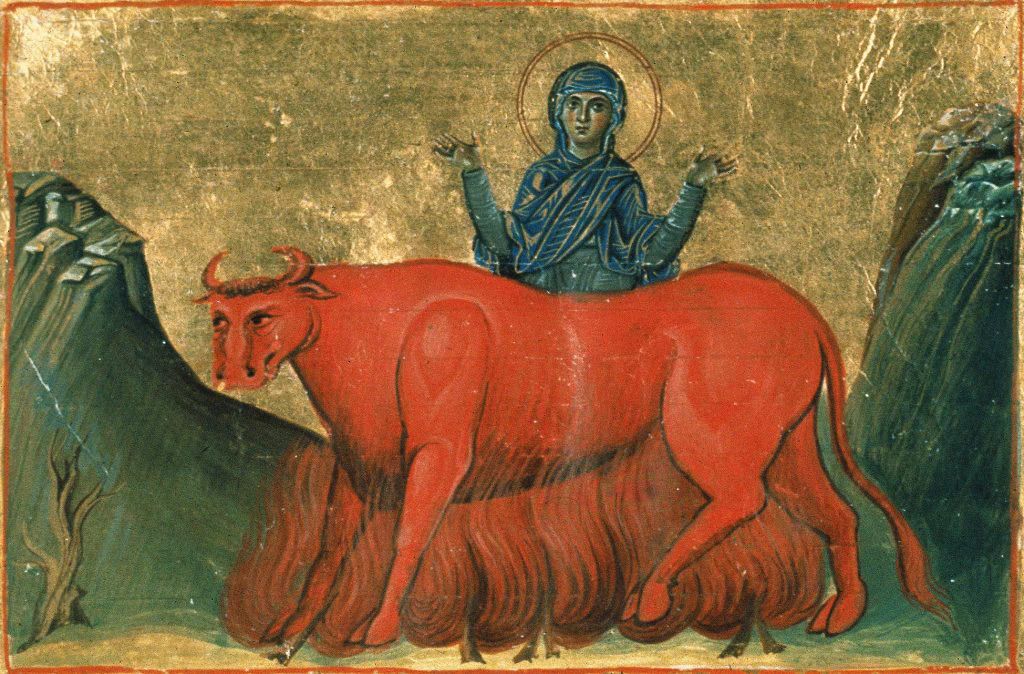
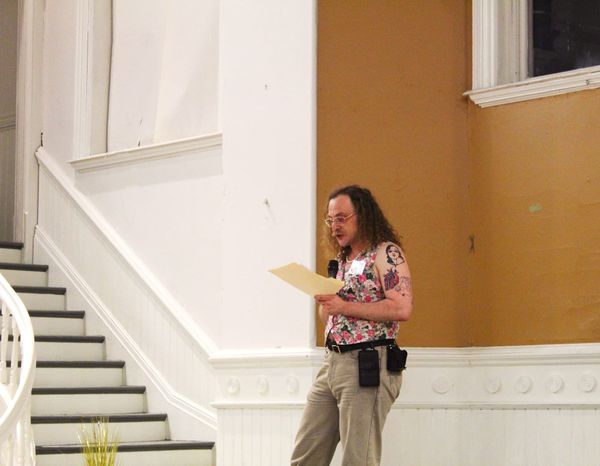
I am thrilled to welcome Lacey Jones as the writer of May’s Rearview missive. Lacey is a dear friend of mine. The art and integrity with which she writes has given my own backbone some iron. And we ran a working group together called Literature and Religion at Yale, and we frequently edit each other’s work. So, when I started up The Rearview, I asked her to write something for it—maybe for Spring. Maybe on resurrection.
Lacey is an associate editor at The Yale Review. Her poetry has been published in Image and her fiction in the Kenyon Review. She received her doctorate in English and religious studies from Yale University this month. She is writing a collection of essays and preparing to pursue an MD.
Good Friday bothers me. A commemoration of despair, it has forgotten despair entirely. In a Christian world, every nadir is buoyed by the promise of resurrection. Total desolation can only ever be an as if; redemption is always lurking somewhere nearby: infiltrating, imbuing, interrupting, insurrecting darkness with light. Christ’s sacrifice is known as a symbolic death, taken literally, by which I mean a story unfolding at the scale of history: our morass of sin shouldered; eternal life ensured. Not even death is allowed to be absolute. I suppose it’s one way we are made in the image of Christ: our suffering is always wrapped tightly in the promise of repair.
Maybe it’s better to say that sacrifice is a story, a way of narrating loss that instills it with virtue. You can die for almost anything—country, crime, family, faith, love, virtue—and people will comprehend your motivations, even if they disagree; you can die of almost anything—a broken heart, a broken body, someone else’s martyrdom, someone else’s hate, someone else’s power, natural disaster, addiction—and that, too, will be understood. Reason will offer the tiniest jib of a foothold, and people will tiptoe onto it, balancing carefully on displaced anger and misplaced blame, eventually steadying themselves enough to weave narratives of memory and cling to posthumous signs of presence: a bird, a butterfly, a child. You can give a saccharine account of anything if you try hard enough. We have two names for such storytelling: grief; resilience.
It is hard to tell a story about suicide. It is hard to write an essay that says, “I wanted to kill myself.” Not simply because of long standing stigmas and social shame, not because killing yourself is the “one truly serious philosophical problem” as Camus would have it, not because of abrupt loss, not because a person suddenly becomes unrecognizable in their attempt, not because they implicate others in their death, not even because I didn’t do it. It is hard to tell a story about suicide, because suicide is the refusal of story—a wound that will not be cauterized into narrative. It is the loss of faith in retellings of pain to alleviate suffering; it is opting out of anything but the bluntest resolution. Suicide swallows language. It leaves a life in front of you and then walks away, immune to anything you might have to say.
On Good Friday I try to imagine what it must be like to give yourself to God, a living sacrifice, and I wind up thinking about Judas instead.
The danger in dwelling too much on death is that it becomes the furthest point of thought, the end at which everything I think arrives. Most of the intellectuals I know fear religious conversion for the same reason, which is that any trajectory one sets out on will suddenly become teleologically-determined. Start from anywhere when you’re religious or suicidal, and eventually you’ll slam right up against the Absolute.
Good Friday meets suffering with empathy and grace. Jesus has endured your pain; because of Jesus, your pain will not be eternal. The empathy part has always felt strange to me, as if it should be consoling to know that God has undergone my particular pain. I hate myself, God’s creation. Does Christ know what it is to hate himself? Is the answer to that question the most I will ever know of divine love? I wound God every day I am alive. If knowing that I wound God by wounding myself wounds me again, am I atoning?
On Good Friday, priests prostate themselves before a barren altar. Facedown, forehead against the floor, they submit. Something in me pangs when a priest lies before the cross—their moment of collapse is mitigated by its dual function as worship. Every year I wonder what it would feel like to love God so much you could surrender so viscerally. On Good Friday I try to imagine what it must be like to give yourself to God, a living sacrifice, and I wind up thinking about Judas instead, so tortured by his role in Christ’s death that he hangs himself. It’s the parallelism that gets me: two men suspended from trees, forsaken by God. Both die.
There is a strange stretch of time after deciding to die and before revival when the finality of death and the coming of resurrection cannot be distinguished: entombment. A spiritual rigor mortis; a last choking grasp at the shape of life; a portent of life to come. Stories whirl around in the tomb, about it; the language of resilience intermingles with that of grief. Despair settles to the bottom like sand.
My dissertation advisor has spent the last seven years getting on my case about playing around with abstractions like I’m batting a bowling ball through the air. She thinks it would be more effective to tell my reader why I’m throwing the thing up there in the first place or to describe the shape of the floorboards after it crashes through them.
The last time I tried to write about Kierkegaard, she told me I had managed to turn existentialism into hieroglyphics. It wasn’t a compliment. My writing entombs things. It feels like walking around the same stupid gallery, staring at giant blocks of white marble. They all look the same. Every plaque has a single noun printed on them—despair, sacrifice, death, reflection, suicide—each word cavernous and big and impossibly smooth, the kind of words you can’t get a grip on, ones that seem to happen of their own accord.
I am living what I had planned not to survive.
During the first years of my PhD, I was suicidal. I had been given the life I wanted but it would be, everyone told everyone else, impossible to keep. No academic jobs existed; those that did were basically a game of roulette. If I couldn’t keep the university, the intellectual autonomy, the time to write, the conversational partners, the promise of maybe one day producing something great, the luxury of having a job proximate to my deepest personal investments, the chance to use my writing to justify my existence—if I was forced out of this, I reasoned, I would simply kill myself. I didn’t want to survive in any other context. So I raised the stakes to life or death.
I graduated last Monday with a PhD in English and Religious Studies, a disappointing dissertation, no partner, no distinction, and no tenure-track job prospects. I am living what I had planned not to survive. When I say it feels like death, my metaphor quavers a little. I told Sam I would write an essay about resurrection, but everything around me is barren, everything inside me is melodrama, and I can’t summon the requisite earnestness to try and find poetry.
This essay is me, writing past the ending I had planned. It feels like hell.
Kierkegaard’s Either/Or opens by describing the “poor wretches” inside the metal chamber of Phalaris’s bull—an ancient Roman torture device in which victims were slowly roasted alive. They scream and scream, and all anyone else can hear is a melody. The poet, he writes, is like them, plagued with a kind of suffering whose translation into beauty only doubles his pain: “What is a poet? An unhappy person who conceals profound anguish in his heart but whose lips are so formed that as sighs and cries pass him over they sound like beautiful music.”
I think a lot about the poet. I want to know if there is any way around his problem or what, exactly, his problem is—if no one sees his sadness or if no one wants him to feel better. Either way, disclosure stops working as a mechanism for intimacy. No matter how much suffering the poet reveals, no one meets him in it. He doesn’t need them to be inside the bull with him—but no one will even help him climb out. That is confusing too, because it isn’t clear to me if the poet wants his sighs and cries to stop being mistaken for music. It isn’t clear that leaving the bull is even a thing he could imagine, let alone want.
What I want is to be able to want things at all. Or if I’m really being honest, I want people to want things for me, want them to will my existence for the sake of my song. I envy the poet for how much his voice is wanted. The audience applauds the resonances of his pain and longs for more. Perhaps they know nothing of his suffering, or perhaps they think his music is worth his anguish. They only ever seemed to want him for his screams. I write, but I don’t scream. Screaming is my last resort—if people didn’t listen to that, I couldn’t figure out the point in going on with anything.
Once my professor asked me if confession implied redemption, and it was Kierkegaard’s poet that kept me from answering. I kept trying to figure out if either of us could communicate anguish in a way that would be impossible to hear as music, that might persuade someone to intervene. The tear-thirsty audience is so complicated; they look and they see but they don’t understand. But there’s nothing the poet can do about it. Some part of me knows that the poet’s lips cannot change form.
As the poet screams and his audience begs him to keep singing, Kierkegaard introduces another set of characters: the reviewers, who survey this scene and say, “That is right; so it must be according to the rules of esthetics.” Aesthetics sound like hell. I hope to God I’m the one burning, because the alternative is much worse: “A reviewer,” the narrator continues, “resembles a poet to a hair, except that he does not have the anguish in his heart, or the music on his lips.”
Despair prolongs endlessly; it consumes the self but never entirely.
The reviewers do not have the anguish; they do not know it. But they recognize the fact of it. They can’t make the music, and they recognize that too, along with the quavering disjunction between what is cried out and what is heard. Without the lips necessary for music or the pain that moves through them, the reviewer is like the poet in a kind of meta way: one who names the aesthetic life, even lives it, but not one who assumes it, not one who shoulders it as choice.
Reviewers are constitutionally incapable of being touched—metaphorically speaking. They are consummate deflectors, confusing critique for the “intimacy of scrutiny,” to borrow Audre Lorde’s phrase. But the closest they come to intimacy is refusal. If I were Kierkegaard’s poet, I’d hate the reviewers most of all, the ones who went around translating the fact of my pain and the glory of its art but never knowing what it was, never how it held things. Their lives weren’t at stake. The poet’s life probably wasn’t either—no one was going to kill him inside that metaphorical bull, because they wanted to hear his music. No one was going to help him out. Not the audience who heard and did not understand; not the reviewers who declared sacrifice aesthetic.
Maybe I’m fucked whether I’m a poet or not—either I’ll spend the rest of my life screaming, or I’ll die from not screaming loud enough, or I’ll be rescued because my song was out of tune. During those early PhD years, confronted with the same prospects, I thought death was the best option. Now, medicated, in the wake of graduation, I’ve missed my deadline and planned a future instead: a puppy, medical school, rock climbing, writing. Things are better. So tell me why all of this possibility feels like resignation. Tell me why emerging from the bull feels like I’m blooming with a fungus the heat held at bay.
In The Sickness unto Death, Kierkegaard says “the torment of despair is precisely the inability to die.” He meant it in a religious way of course—in Christianity, the self that longs for its own cessation instead finds eternal perpetuation. Essentially my problem is the same: “What he… despairs over is precisely this: that he cannot consume himself, cannot be rid of himself, cannot become nothing.” Despair prolongs endlessly; it consumes the self but never entirely; it is an “incessantly inward gnawing” denied satiation. An “impotent self-consumption,” Kierkegaard says. But how do you describe the feeling of despair as phantom pain, or what remains of itself when it has been cut away?, Kierkegaard says “the torment of despair is precisely the inability to die.” He meant it in a religious way of course—in Christianity, the self that longs for its own cessation instead finds eternal perpetuation. Essentially my problem is the same: “What he… despairs over is precisely this: that he cannot consume himself, cannot be rid of himself, cannot become nothing.” Despair prolongs endlessly; it consumes the self but never entirely; it is an “incessantly inward gnawing” denied satiation. An “impotent self-consumption,” Kierkegaard says. But how do you describe the feeling of despair as phantom pain, or what remains of itself when it has been cut away?
Garth Greenwell’s protagonist in Small Rain, a poet, offers a kind of ars poetica via his reading of a line from Keats’ “Ode on a Grecian Urn”: “And all her silken flanks with garlands drest.” It’s an image of a cow being led to sacrifice. The scene, etched fixedly into its urn, undoes any reading of the poem as “pure affirmation” and “beauty.” Instead, the poet insists, Keats’s is “a poem of horrors” that puts its audience’s hands on the cow’s flank to feel the creature’s terror beating beneath its adornment.
For Greenwell’s narrator, a theory of art is a theory of civilization: “the flowers covering the slaughter.” It’s not just that we like to disguise our most murderous moments in decoration, a nihilist might elaborate. The problem is that the flowers really are beautiful. Greenwell’s reading, like Kierkegaard’s simile, entails a certain bovine inescapability and a vision of poetry inextricable from violence. Both texts also share a meta-poetics, where the narrator—and author—cagily stake their own claims to the identity of poet and where the writers themselves, Greenwell and Kierkegaard, have noncommittal biographical relationship to their narrators. At every level of composition in these scenes, the poet’s own complicity cannot quite be pinned down. Does their suffering recuse them from moral responsibility?
The poet is trapped inside an inflection point.
Kierkegaard’s problem was that he tried to make his life a poem. He tried to give his life the form of sacrifice by surrendering to despair. György Lukács tells the story mercilessly: Kierkegaard desired honesty, but that meant “forc[ing] life to yield up to its single meaning.” Honesty took the form of choice—of sacrifice—and then everything that followed should have been fixed there, a eulogy to his decision. Whatever followed—anything he wrote or said or did—would be a symbol of that choice. Whatever he lived between choice and death would also have been rigor vitae, or life frozen in the form of his decision. But psychology, Lukács says, makes honesty impossible. Kierkegaard left the love of his life, destroyed himself in her esteem, and something about the pain in that felt like truth. He liked its tortures, which meant sacrifice was a failure; it did not purge him of pleasure. He did not give up what mattered most to him—his sadness, which he wanted more than love. Even the poet is lying to himself.
Kierkegaard’s poet screams through lips that turn his pain into others’ pleasure. It is with his lips as with his life. The poet is trapped inside an inflection point. He tells himself he will leave only when it is necessary. As he roasts, his poems themselves become another source of pain. The poet utters them but does not understand what everyone else is hearing. Only the critic sees the translation. She declares the scene a sacrifice and keeps watching, unperturbed. If she takes pity on the poet, she will read his poems back to him as song, so that he can hear the tune. She might even do him the kindness of a close reading and attempt to discover in the poem the shape of his lips, the cipher his pain passes through. He will come to understand their form alongside her; he will reverse-engineer his screams into songs that will pass through his lips and tell of his pain. But then his poems will stop being beautiful, and no one will listen at all.
Greenwell’s reading of Keats, on the other hand, seems to ask if, in the end, there is any difference between a poet and a reviewer—if the poem’s music and its lack of anguish change anything at all about the perpetual reinscription of flowers over horror and the horror of that reinscription. Is a poet’s recognition of this floral masquerade fundamentally different than a reviewer’s? Is it even more insidious to make the exposure of aestheticized violence itself beautiful? Or to mistake violence for beauty in the first place? Greenwell as poet constructs a poet narrator who close reads a poet’s rendering of art’s unique despair. From outside the urn’s bull, he attempts to look inside his own.
Lukács says the poet lives the least poetic of lives because they cannot affix themself to sacrifice and still be a poet. They cannot make the kind of totalizing choice Kierkegaard made, because their work is to proliferate the possibility of choice. They do not get to live the seriousness of the Absolute; the Absolute is what they must fashion from life, what they make crystalline on the page.
A poet’s life is null and worthless because it is never absolute, never a thing in itself and for itself, because it is always there only in relation to something, and this relation is meaningless and yet it completely absorbs the life—for a moment at least; but then life is made up of nothing but such moments.”
In Lukács’ reading, Kierkegaard is not a poet. He is a philosopher and theologian trying to speak backwards, as it were, to speak the poem that would pass through his lips and become the honesty of a life. “But is it not a compromise,” Lukács asks, “to see life as being without compromises? Is not such nailing down of absoluteness, rather, an evasion of the duty to look at everything?” My question is the inverse: is it not a compromise to refuse to be responsible, truly responsible, for seeing one thing?
There’s this line from Goethe which translates to something like “when mankind is dumb in its torment, a god granted me to speak of my suffering.” I thought this was the point of my doctoral studies, to figure out what despair makes visible, what it makes knowable—and why that revelation matters. This was a “clinical” question: the rigidity of thought, the well-worn and reified grooves of neural networks, the all-or-nothing thinking, the wild enfolding of maniacal ego and self-loathing. It was also an aesthetic one. I wanted to know what despair looked like; how it represented things. I thought this was the question of my life. Maybe it is. But surviving long enough to answer it means prolonged periods of speaking from an aftermath, and I don’t know if it’s possible to speak of despair from outside of it. I don’t know if it’s possible to understand despair from inside of it. Good Friday confounds me.
I have been told since I was born that Christ died for me and that if I surrendered to him, I would be given eternal life. Twice I have taken baptismal classes; twice I have balked at the forgiveness of my sins; twice I have refused to surrender. “Sin is,” writes Kierkegaard, “before God, or with the conception of God, in despair not to will to be oneself, or in despair to will to be oneself.” But the self I will—and will not—to be is a self in despair. What if the tomb is the only place I can live? If I am a self constantly eyeing the leap of faith, a self teetering at the brink of life, who will I be if I jump?